Artículo original
Vol. 46 Núm. 1 (2026)
17 min
Impact of pesticide use on food security and child nutrition status in agricultural household in East Lombok (Indonesia): A cross-sectional study
Retno WAHYUNINGSIH, Lalu Khairul ABDI, Reni SOFIYATIN, Joyeti DARNI, Lalu Juntra UTAMA
Department of Nutrition, Health Polytechnic of Mataram, Indonesia.
*Correspondencia:
Lalu Juntra Utama juntra8686@gmail.com
Recepción:
30/10/2025
Aceptación:
15/02/2026
Publicación:
04/03/2026
Cómo citar
Retno WAHYUNINGSIH, Lalu Khairul ABDI, Reni SOFIYATIN, Joyeti DARNI, Lalu Juntra UTAMA. Impact of pesticide use on food security and child nutrition status in agricultural household in East Lombok (Indonesia): A cross-sectional study. Nutr Clín Diet Hosp. 2026; 46(1):270-276 DOI: 10.12873/461juntra2
Métricas
320
Visualizaciones
89
Descargas
Compartir
Compartir
Resumen (EN)
Objective: The contemporary agricultural context, pesticides have been identified as a pivotal element, playing a critical role in protecting crop plants from a range of pests, diseases and weeds. This protection is integral to ensuring optimal productivity in modern farming systems. Nevertheless, their extensive utilization engenders considerable jeopardy to environmental health, encompassing soil and water. The consequences of pollution for the environment and human health of the population is also impacted, with potential links to chronic diseases and oncological diseases.
Methods: This study examines pesticide usage and to analyze the problem of food security and nutrition of toddlers in farming household in Sembalun, East Lombok, Indonesia using a cross-sectional observational analitical study among farmers who have children under five years of age. This study was conducted from May to August 2025. Food security was measured using standardized questionnaires called Household Food Insecurity Access Scale (HFIAS). Pesticide use was collected using questionnaires and nutritional status data is obtained from measurements of children’s weight and height.
Results: The results of the study found a significant relationship between pesticide use and nutritional status in children (p < 0.049). Children exposed to pesticides through their parents clothing worn during pesticide use. There is a significant relationship between food security and children’s nutritional status.
Conclusion: Agricultural practices are based on the intensive use of pesticides. Waste management in fruits and vegetables for household consumption needs to be considered. Monitoring pesticide residues in food does not account for the reality of chronic exposure arising from consumption, so further research is needed in the future.
Palabras clave (EN):
Child health
rural household
environmental exposure
intensive agriculture
INTRODUCTION
The utilization of pesticides in contemporary agriculture is of paramount importance to food production. The primary function of these chemicals is to enhance productivity in agricultural contexts and to protect crops from pests, diseases, and weeds. The most prevalent categories of pesticides are insecticides, fungicides, and herbicides. These substances have been demonstrated to assist in the regulation of noxious organisms, encompassing insects, fungi, bacteria, and weeds, thereby mitigating the potential for yield loss and diminished product quality. Nevertheless, a substantial body of research has demonstrated that pesticide utilization exerts considerable deleterious effects on both the environment and human health. The environmental consequences of this phenomenon are manifold. These include, but are not limited to, soil and water pollution, as well as a decline in biodiversity and a reduction in uncultivated plant populations1-3,. In addition, it has been demonstrated that pesticides have the capacity to exert a detrimental impact on the health of human beings. Indeed, there is an established correlation between the utilization of such substances and the onset of chronic diseases, as well as oncological diseases4-5.
Pesticide exposure has been demonstrated to induce two distinct outcomes: the manifestation of acute symptoms occurs within a few hours of exposure to high concentrations of pesticides; in contrast, the onset of chronic symptoms is characterized by a protracted response time, often manifesting after moderate exposure. These outcomes have profound ramifications on public health. Children can be exposed to pesticides in two ways. They can be involved in agricultural activities that use pesticides. Or they can come into contact with pesticides through water, soil or food that has been contaminated with pesticide residue. A study was done at one of the main schools in Brebes, a place where a lot of people grow onions. The study found that 81.3% of the students were involved in farming activities. These activities included finding pests, helping with the harvest, and removing onions from stalks6. Concurrently, a further study demonstrated that children whose fathers are employed in agriculture are more prone to developing goitre than those whose fathers do not work in this sector7. Pesticide exposure can be a risk factor for growth and development disorders in children living in agricultural areas8. Exposure to pesticides through breast milk, food, and drinking water is considered the most important cause of EED (environmental enteric dysfunction)10. High intake of nutrients, energy and protein will not provide sufficient benefits for growth and development if EED occurs11. There is a relationship between children playing in agricultural areas, storing pesticides in the home, spraying, washing spraying equipment, and mixing pesticides with stunting in children aged 2-5 years12.
Stunting in children under five years of age is significantly associated with food poverty in the home. Household food security is very important for meeting nutritional needs, thereby resulting in good nutritional status13. Inadequate nutritional intake is a condition of household food insecurity, where availability and access are lacking. There is a close relationship between food security and the nutritional status of toddlers. Families with adequate food security will have good nutritional status, whereas those with insufficient food will likely experience malnutrition and undernourishment13.
Indonesia is one of the countries with a high burden of stunting. Data published by the Indonesian Ministry of Health shows that the incidence of stunting in children under five years of age is still high at 30.8%. The prevalence of stunting in NTB is currently recorded at 33.5%, which is still above the national figure of 29.6%. Based on the results of the 2022 SSGI survey, the prevalence of stunting among toddlers in NTB Province reached 32.7%, with a prevalence of 35.6% in East Lombok Regency. In 2023, based on SKI data, NTB succeeded in reducing the stunting rate to 24.6%14. The present study was conducted with the objective of determining whether exposure to pesticides is associated with the development of growth disorders in children residing in agricultural areas.
METHODS
This study employed a analytical cross-sectional study design. This type of study collects data from a large number of subjects at a specific point in time to compare differences between groups. The research was conducted in Sembalun Subdistrict, East Lombok Regency, located at the foot of Mount Rinjani. Sembalun Subdistrict has 45 Posyandu with a target population of 2,552 people. The research will be conducted in Sembalun Subdistrict, East Lombok Regency. The research will be conducted from February to April 2025 in each selected location. The total sample size will be 320 toddlers, divided into two groups: 160 toddlers with normal nutritional status and 160 toddlers with stunted nutritional status with random sampling. The studied children and their mothers/caregivers were interviewed. Structured questionnaires were used to collect the baseline characteristics (ie, sex, age, parents educational and occupational status), pesticide exposure, HFIAS, FFQ, 24-H Food Recall, FCS, Dietary diversity (HDDS). Pesticide exposure refers to all categories of pesticides, including insecticides, herbicides, and fungicides. Pesticide exposure refers to all categories of pesticides, including insecticides, herbicides, and fungicides. pesticide exposure measurements on the frequency of pesticide preparation, applying pesticides to crops, frequency of washing clothes after pesticide use, use of pesticide doses, number of types of pesticides used, use of masks with frequency categories more than once a week or less than once a week. Height and weight was measured by two postgraduate nutrition who had been trained on the standard procedure of measuring. The height was measured using stadiometer to the nearest 0.1 cm. The measurements were made on each child without shoes, standing in erect position, looking horizontally, with the feet together on a horizontal surface. Stunting was defined as a height for age z-score (HAZ) <-2 SD. Normal HAZ was defined as a HAZ between -2 SD and +2 SD of the child growth standards with WHO Anthro Growth standards15. Mothers height was measured with a stadiometer in the same way as it was measured for children.
The collection of household food security data was undertaken using the Household Food Insecurity Access Scale (HFIAS). Participants were invited to respond to a query that reflected the condition during the preceding month. The tool under consideration comprised a total of nine questions, with a score ranging from 0 to 27. Scores ranging from 0 to 1 are indicative of food security, with 2 to 7 denoting mild food insecurity, 8 to 14 representing moderate food insecurity, and 15 to 27 signifying severe food insecurity16. Concurrently, the utilization of numeric data was employed for the purpose of conducting a correlation and linear regression analysis. Furthermore, the utilization of numerical data facilitated the comprehension of the interrelationship with other variables by the researchers. This included income, dietary diversity, and BMI.
The measurement of dietary diversity was conducted through the utilization of a questionnaire, the Women’s Dietary Diversity Scores (WDDS) questionnaire. This questionnaire encompassed ten distinct food groups, including starchy staple foods (grains, rice, and tubers), pulses (beans and peas), nuts and seeds, dairy products (milk, yoghurt, and cheese), meat/poultry/fish, eggs, green leafy vegetables, vitamin A-rich fruits and vegetables, other vegetables (lettuce, cabbage, celery, cucumber, and tomato), and other fruits17. The data were obtained through the implementation of a 1x24-hour recall protocol and were designated as one food group if they were consumed in quantities amounting to a minimum of 10 grams. Subjects who consumed fewer than five food groups were classified as having a less diverse diet, while those who consumed more than five food groups were categorized as having a more diverse diet. This is because the five food groups that are often promoted in dietary guidelines are considered to be the most fundamental.
Data processing is done first with MS Excel format containing a sheet equipped with variables to enter data from the questionnaire. For all quantitative data, mean, standard deviation, maximum score, and minimum score will be analyzed, while categorical data will be categorized according to variables. All collected data were processed and analyzed with the help of computer applications such as Microsoft Excel and SPSS for Windows. Data analysis was carried out univariate and bivariate, starting with grouping the variables studied. The relationship test to see the relationship between social access, physical access, economic access, hygiene and sanitation, pesticide exposure, food security, nutritional adequacy level and nutritional status of children under five years old used the Spearman Rank correlation test. The study was approved by the Health Research Ethics Committee of Polytechnic of Health Mataram with registration number DP.04.03/F.XLVIII.14/176/2025. All respondents were requested to sign the informed consent form as a confirmation of their voluntary participation.
RESULTS
The participants were a total of 320 family who have children under five years in this study. There were all mothers in the stunting and non-stunting group who had data records. The mean children age of stunting and non stunting was almost the same (Table 1). We did not question the questionnaire of a few mothers at the time of the study because they were working outside the study area. The majority of parents had a high level of education. Many of the studied parents were married.
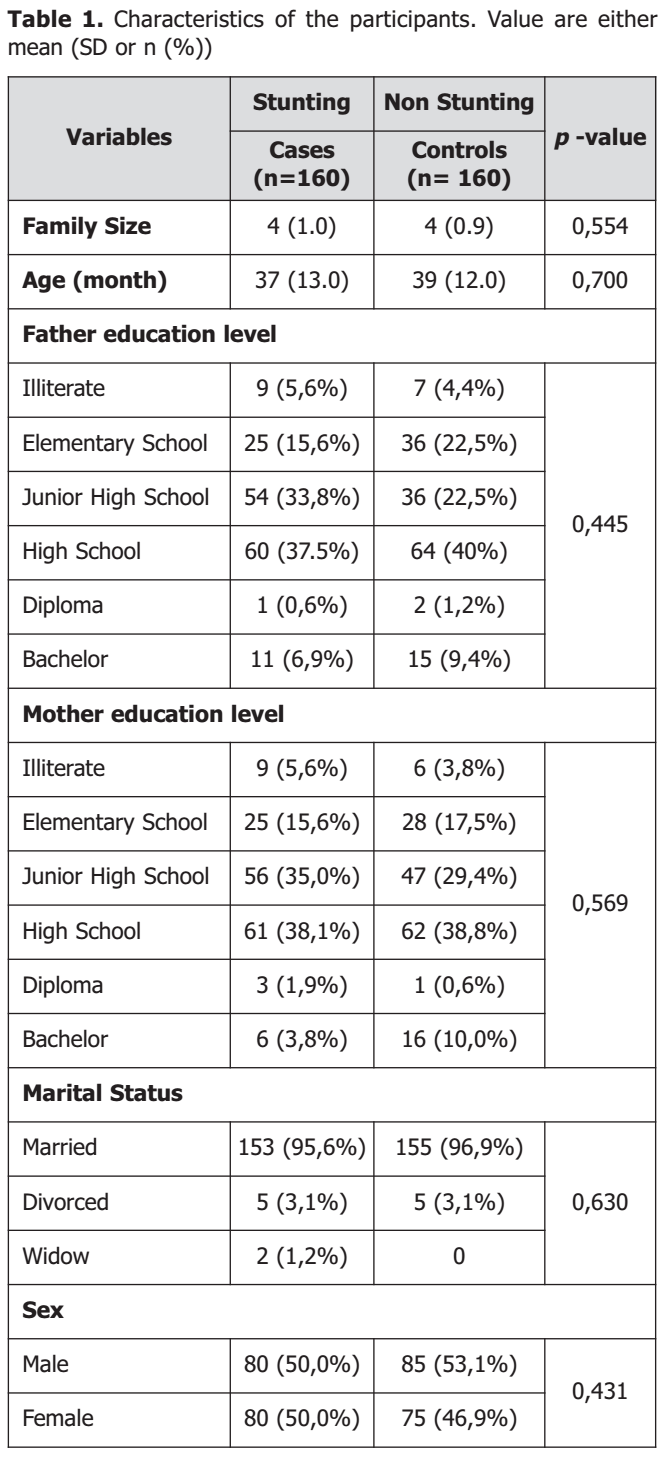
The educational level of fathers of stunted and non-stunted toddlers is mostly high school graduates, as is the educational level of mothers of toddlers, who are predominantly high school graduates. However, in non-stunted families, more mothers have completed university education.
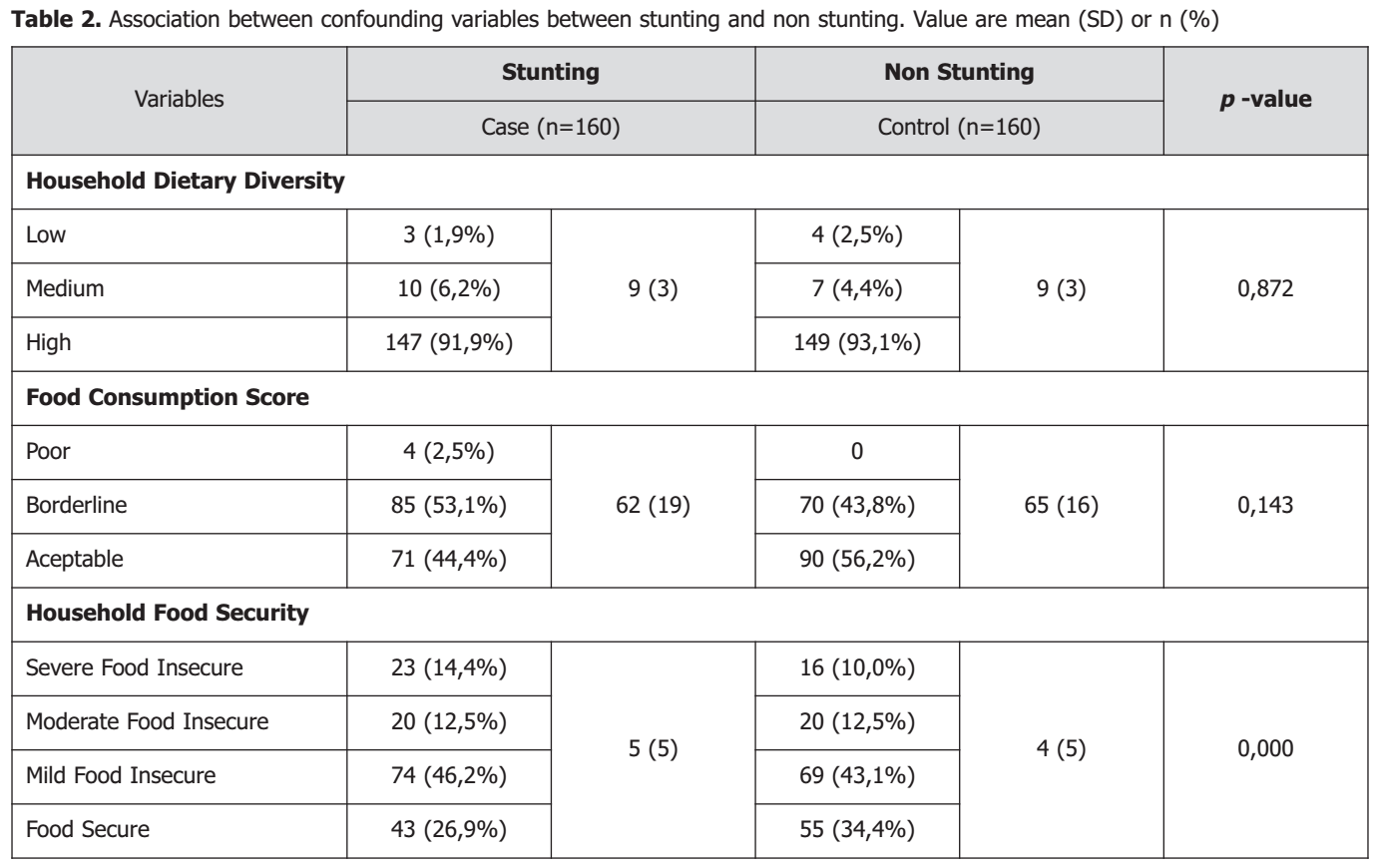
The Dietary diversity variables in the subject households, as shown in Table 2 above, can be explained by the fact that based on the HDDS (food diversity) indicator, most are in the high category, respectively 147 (91.9%) in stunted toddler household and 149 (93.1%) in non-stunted toddlers, with an average score of 9 points. Based on the FCS (food consumption) indicator, 71 (44.4%) household with stunted toddlers were found to be in the acceptable category with an average score of 62, while 90 (56.2%) household with non-stunted toddlers were in the acceptable category with an average score of 65 points. Household food security based on the HFIAS (food insecurity) indicator showed that 23 (14.4%) household with stunted toddlers were in the category of severe food insecurity, while 16 (10%) household with non-stunted toddlers were in the category of severe food insecurity. The food security category for stunted toddler household was 43 (26.9%), which was smaller than that for non-stunted toddler household, which was 55 (34.4%).
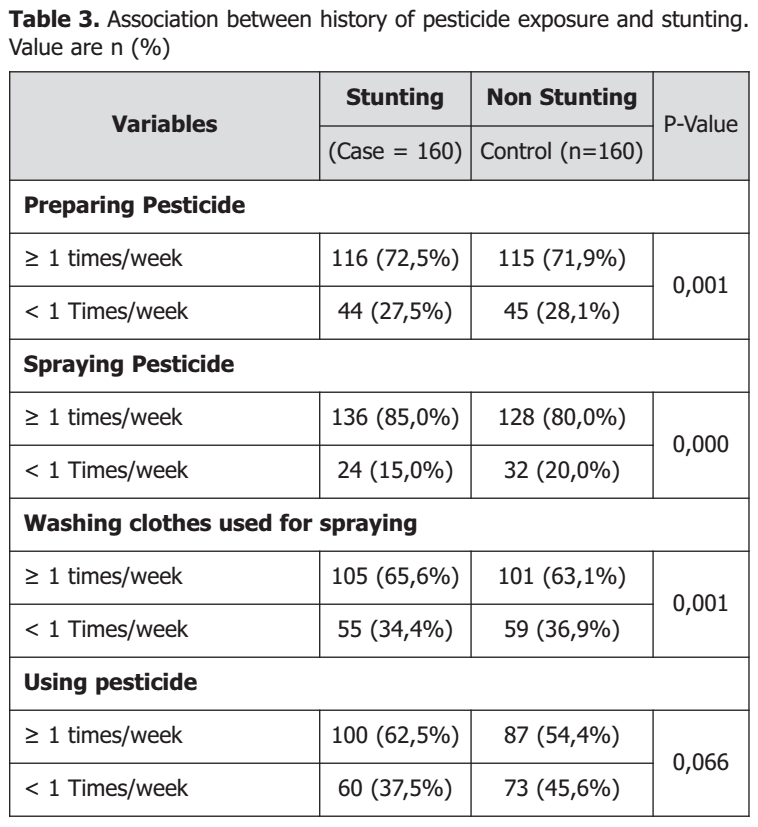
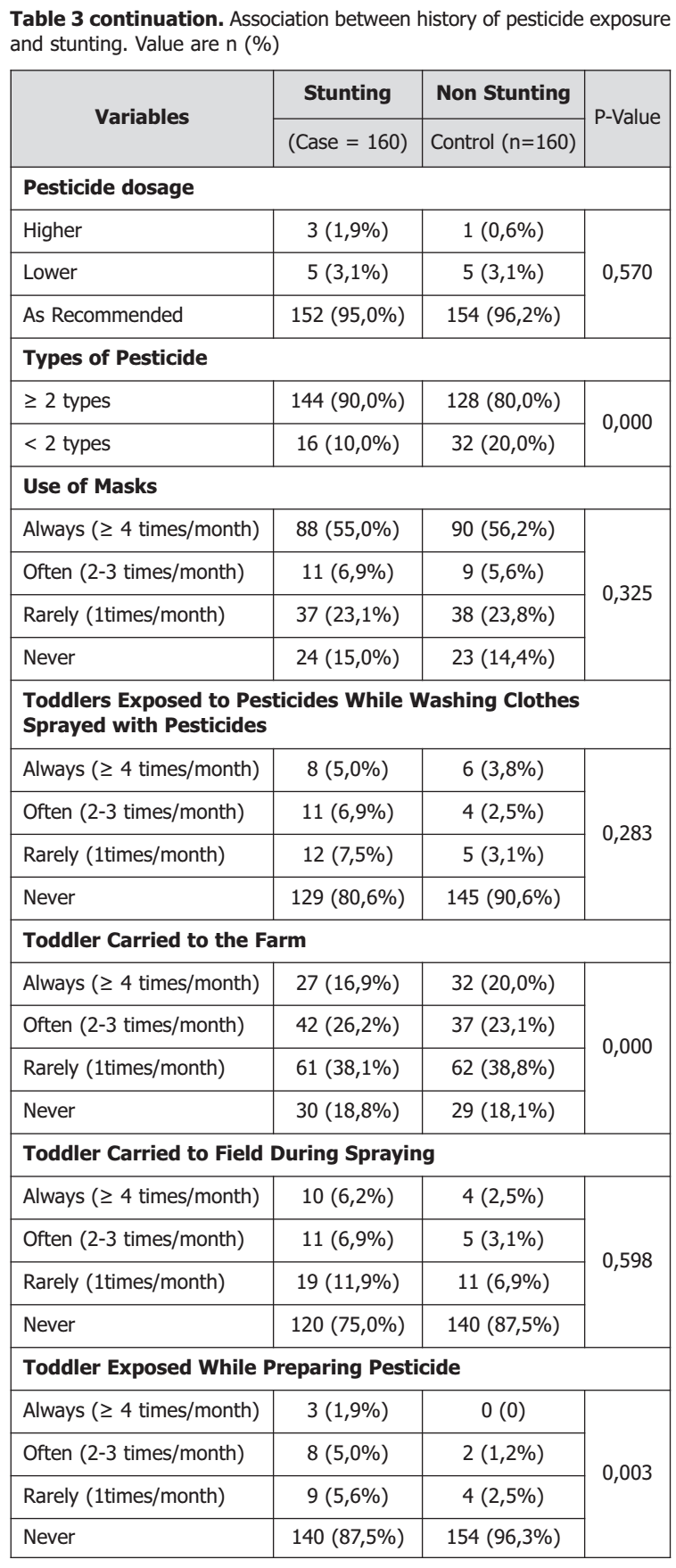
Regarding pesticide exposure in toddlers based on Table 3, it can be explained that in the stunted toddler group, 10 (6.2%) toddlers were always taken to the fields during spraying and 11 (6.9%) were often taken to the fields during spraying, while in the non-stunted group, only 4 (2.5%) infants were always taken to the fields during spraying and 5 (3.1%) were often taken to the fields during spraying. Pesticide exposure in children can occur directly, due to their direct involvement in agricultural activities, or indirectly through contact with water, soil, or food contaminated with pesticide residues. Pesticide exposure can be a risk factor for growth disorders in children living in agricultural areas.
DISCUSSION
Pesticide exposure on stunting
Stunting is defined as a condition of linear growth disorder, and has been more frequently associated with inadequate nutritional intake18. A reduced intake of macronutrients, particularly energy and protein, has been identified as a causative factor for growth disorders in children. Amino acids, both those present within the body and those derived from food, are essential components in the formation of proteins and collagen. Energy is supplied to the body by food sources such as amino acids, carbohydrates and fats. These support the growth process directly or indirectly through the provision of fuel for various cells involved in cell or tissue regeneration, including neutrophils, macrophages and lymphocytes19-20. Investigated the association between high-exposure pesticide-induced stunting among school-aged children residing in proximity to onion farming. Evidence of stunting was proven by HAZ and low IGF-1 levels. Conducted a comprehensive evaluation of the risk factors associated with stunting, encompassing nutritional status, low birth weight, infection history, and parental education and occupation. The present study has demonstrated an association between stunting and protein and energy intake, in addition to elevated exposure to pesticides. Nevertheless, the study’s power was limited by an inadequate sample size20. The study by Paudel et al. in their adjusted multivariate analysis (aOR, 3.51; 95% CI, 1.33–9.23). The strength of the association between the results was demonstrated by the study’s adequate sample size. However, the study was constrained by its utilization of suboptimal methods for detecting pesticide exposure21.
A review by Vilcins et al. with regard to pesticide-induced stunting (aOR, 3.51; 95% CI, 1.33–9.23)22. In addition to the preceding findings, Grandjean et al discovered that a low score on the Stanford-Binet Copying Test, a neurodevelopmental assessment, was associated with exposure to pesticides (β=-1.01; standard error [SE]: 0.37; P<0.00) and stunting in children (β:-0.74; SE: 0.35; P<0.05). Of the 37 exposed groups investigated (-1.84±0.83; range, -3.65 to 0.35), 15 children with stunting had median dimethyl metabolite and diethyl metabolite levels of 0.2 nmol/kg/day and 0.27 nmol/kg/day, respectively23. However, stunting has been demonstrated to affect a child’s gross motor function, thus constituting a moderate variable or independent factor in an individual’s neurodevelopment. The present study found an increased prevalence of stunting in children following exposure to high or low levels of pesticides. The children in both regions resided in rural areas and exhibited lower levels of education and income24. The exposure of humans to toxic substances found in their environment, such as pesticides, has been shown to result in an increase in oxidative stress. This, in turn, leads to an increased energy expenditure for the activation of the immune system. It can thus be concluded that a reduced amount of energy will be available for maintenance, reproduction, growth and thermoregulation25. This wasteful use of energy is known as the Barrel Model. Research on young Japanese quails showed that exposure to low levels of chlorpyrifos, one of the most commonly used pesticides in farming areas, can disrupt how energy is used by the body and its ability to remove toxins26.
Studies have shown that being around pesticides can be linked to stunting. Most published studies have looked at how organochlorine pesticides can make animals stunted. So, we still need to find out how organophosphate, pyrethroid, and carbamate pesticides affect stunting. It is thought that the different ways these pesticides can harm the body will result in different effects on growth hormone. It’s hard to work out the link between exposure and stunting, but we know that pesticides are bad for people’s health. This study gives us the proof we need to suggest that farmers should use pesticides more carefully. It is very important to protect vulnerable people, including children, in agricultural areas to prevent harmful events in the future.
CONCLUSIONS
We found that children living in agricultural areas who were exposed to pesticides were more likely to be stunted. Being around pesticides might be a reason why some children don’t grow as much. In future studies, other possible causes of concern, such as lead, phthalate, dioxins and PCBs levels, should also be considered. These results strongly support taking action to reduce pesticide exposure among pregnant women and children. For example, this could mean reducing or limiting their involvement in agricultural activities.
ACKNOWLEDGMENTS
The authors are grateful to the Health Polytechnic of Mataram, Neys-van Hongstraten Netherland foundation (NHF) and IPB University for the major funding of this research with the “Research grant proposal inter-university collaboration program in food and nutrition security” 2025. The author would like to thank the including Lombok Timur Health Department for permission to conduct research and guidance. The authors also thank the study participants and their parents.
REFERENCES
- Rani L., Thapa K., Kanojia N., Sharma N., Singh S., Grewal A. S., Srivastav A. L., Kaushal J. (2021). An extensive review on the consequences of chemical pesticides on human health and environment. J. Clean. Prod. 283: 124657.
- Tudi M., Daniel Ruan H., Wang L., Lyu J., Sadler R., Connell D., Chu C., Phung D. T. (2021). Agriculture Development, Pesticide Application and Its Impact on the Environment. Int. J. Environ. Res. Public Health. 18:1112.
- Datsko O., Zakharchenko E., Butenko Y., Rozhko V., Karpenko O., Kravchenko N., Sakhoshko M., Davydenko M., Hnitetskiy M., Khtystenko A. (2024a). Environmental Aspects of Sustainable Corn Production and its Impact on Grain Quality. Ecol. Eng. Environ. Technol. 25:163-167.
- Eshkaraev S., Turaev K., Eshkoraev S. (2021). Influence of Pesticides on Increasing Soil Radioactivity. World J. Appl. Chem., 6:49.
- Sobko Mykola, Zakharchenko Elina, Kolisnyk Oleg, Medvid Svitlana, Kysylchuk Andrii, Krokhin Stanislav, Rudska Nina, Amons Sergey, Omelianenko Oleksandr, Bondarets Roman, Surzhykov Mykola. (2024). Yield and energy efficiency of sunflower cultivation under different primary soil tillage methods. Mod. Phytomorphology. 18: 200-204. Zenodo.
- Budiyono Budiyono, Suhartono Suhartono, Kartini A. et al. Pesticide Metabolites, Anti-Thyroid Peroxidase and Thyroid Stimulating Hormone Status in School Children: A Preliminary Study in Agriculture Areas in Indonesia. Int J Sci Basic Appl Res. 2015;22:1–12.
- Kartini A, Suhartono, Pangestuti D. et al. Goiter and hypothyroidism among elementary school children in lowland agricultural area, Brebes District Indonesia. Indian J Public Heal Res Dev. 2018;9:120–5
- Kartin, A., Subagio, H. W., Hadisaputro, S., Kartasurya, M. I., Suhartono, S., & Budiyono, B. (2019). Pesticide Exposure and Stunting among Children in Agricultural Kawasans. The International Journal of Occupational and Environmental Medicine, 10(1), 17–29. https://doi.org/10.15171/ijoem.2019.1428
- Mapesa, J. O., Maxwell, A. L., & Ryan, E. P. (2016). An Exposome Perspective on Environmental Enteric Dysfunction. Environmental Health Perspectives, 124(8), 1121–1126. https://doi.org/10.1289/ehp.1510459
- Owino, V., Ahmed, T., Freemark, M., Kelly, P., Loy, A., Manary, M., & Loechl, C. (2016). Environmental Enteric Dysfunction and Growth Failure/Stunting in Global Child Health. Pediatrics, 138(6). https://doi.org/10.1542/peds.2016-0641
- Mardiyana, R., Darundiati, Y. H., & Dangiran, H. L. (2020). Hubungan Paparan Pestisida dengan Kejadian Stunting pada Anak Usia 2-5 Tahun di Kabupaten Magelang (Studi Kasus di Kecamatan Ngablak). Media Kesehatan Masyarakat Indonesia, 19(1), 77–82. https://doi.org/10.14710/mkmi.19.1.77-82
- Yang, Q., Yuan, T., Yang, L., Zou, J., Ji, M., et al. (2019). Household food insecurity, dietary diversity, stunting, and anaemia among left-behind children in poor rural areas of China. International Journal of Environmental Research and Public Health, 16(23), 1-13. doi: 10.3390/ijerph16234778.
- Arlius, A., Sudargo, T. and Subejo, S. (2017) ‘Hubungan Ketahanan Pangan Keluarga Dengan Status Gizi Balita (Studi Di Desa Palasari Dan Puskesmas Kecamatan Legok, Kabupaten Tangerang)’, Jurnal Ketahanan Nasional, 23(3), p. 359. Available at: https://doi.org/10.22146/jkn.25500
- Kemenkes.
- World Health Organization. WHO Child Growth Standards. Geneva: WHO Press, 2006.
- Coates J, Swindale A, Bilinsky P. Household Food Insecurity Access Scale (HFIAS) for Measurement of Food Access: Indicator Guide: Version 3. Washington DC: Food and Nutrition Technical Assistance Project, Academy for Educational Development; 2007.
- FAO F. 360. Minimum dietary diversity for women: a guide for measurement. Rome: FAO; 2016. 2017.
- de Onis M, Branca F. Childhood stunting: a global perspective. Matern Child Nutr. 2016;12:12–26. doi: 10.1111/mcn.12231.
- Skottner A. Biosynthesis of Growth Hormone and Insulin-Like Growth Factor-I and the Regulation of their Secretion. Open Endocrinol J. 2012;6(Sup1:M2)
- Kartini A, Subagio HW, Hadisaputro S, Kartasurya MI, Suhartono S, Budiyono B. Pesticide Exposure and Stunting among Children in Agricultural Areas. Int J Occup Environ Med. 2019;10(1):17-29. doi:10.15171/ijoem.2019.1428
- Paudel R, Pradhan B, Wagle RR, Pahari DP, Onta SR. Risk factors for stunting among children: a community based case control study in Nepal. Kathmandu Univ Med J (KUMJ) 2012;10:18–24. doi: 10.3126/kumj.v10i3.8012
- Vilcins D, Sly PD, Jagals P. Environmental risk factors associated with child stunting: a systematic review of the literature. Ann Glob Health. 2018;84:551–62. doi: 10.29024/aogh.2361.
- Grandjean P, Harari R, Barr DB, Debes F. Pesticide exposure and stunting as independent predictors of neurobehavioral deficits in Ecuadorian school children. Pediatrics. 2006;117:e546–56. doi: 10.1542/peds.2005-1781
- Handal AJ, Lozoff B, Breilh J, Harlow SD. Effect of community of residence on neurobehavioral development in infants and young children in a flower-growing region of Ecuador. Environ Health Perspect. 2007;115:128–33. doi: 10.1289/ehp.9261.
- Lukaszewicz-hussain A. Role of oxidative stress in organophosphate insecticide toxicity – Short review. Pestic Biochem Physiol. 2010;98:145–50.
- Narváez C, Manuel J, Píriz G. et al. Subchronic exposure to chlorpyrifos affects energy expenditure and detoxification capacity in juvenile Japanese quails. Chemosphere. 2016;144: 775–84. doi: 10.1016/j.chemosphere.2015.09.060
- Utama, L.J., Abdi, L.K., Yunita, L., Saudia, B.E.P., Kristiandi, K., Nur, A. (2024). Food security of farmer households in Central Lombok Regency. Nutrición Clínica y Dietética Hospitalaria. 44, 3 (Jul. 2024). DOI:https://doi.org/10.12873/443utama.
Explorar
Artículos
Volúmenes
Sobre la revista
Más leídos
Consumo de bebidas energizantes y efectos adversos en la salud de estudiantes universitarios
Nutrición Clínica y Dietética Hospitalaria
Uso de redes sociales y riesgo de trastornos de conducta alimentaria en adolescentes mujeres de un colegio en Lima, Perú
Nutrición Clínica y Dietética Hospitalaria
Consumo de bebidas energizantes en estudiantes universitarios y sus factores asociados.
Nutrición Clínica y Dietética Hospitalaria
Microbiota intestinal y eje intestino-cerebro: una revisión de su interacción con el sistema nervioso central
Nutrición Clínica y Dietética Hospitalaria
Factores asociados a la diabetes mellitus tipo 2 de la población adulta peruana.
Nutrición Clínica y Dietética Hospitalaria