Artículo original
Vol. 46 Núm. 1 (2026)
17 min
The intervention of moringa leaf tea in the “Nutritious Action” programme on the nutritional status and haemoglobin levels in adolescent girls
Nur AWALIAH1, Veni HADJU2, Healty HIDAYANTY2, Rahayu INDRIASARI2, Abdul SALAM2, MUSFIRA3
1 Master’s Programme in Nutritional Science, Faculty of Public Health Hasanuddin University, Indonesia.
2 Department of Nutrition Science, Faculty of Public Health Hasanuddin University, Indonesia.
3 Public Health Doctoral Program Study, Faculty of Public Health Hasanuddin University, Indonesia.
*Correspondencia:
Nur Awaliah phunhas@gmail.com; awaliyahluly27@gmail.com
Recepción:
17/12/2025
Aceptación:
28/02/2026
Publicación:
04/03/2026
Cómo citar
Nur AWALIAH, Veni HADJU, Healty HIDAYANTY, Rahayu INDRIASARI, Abdul SALAM, MUSFIRA. The intervention of moringa leaf tea in the “Nutritious Action” programme on the nutritional status and haemoglobin levels in adolescent girls. Nutr Clín Diet Hosp. 2026; 46(1):318-324 DOI: 10.12873/461nawaliah
Métricas
456
Visualizaciones
86
Descargas
Compartir
Compartir
Resumen (EN)
Background: Adolescent girls are a group vulnerable to nutritional problems, particularly anaemia. Nutritional interventions and functional foods are one strategy for preventing anaemia. This study aimed to compare the effects of moringa tea and Multiple Micronutrient Supplement (MMS) on nutritional status and haemoglobin levels.
Methods: This study employed a quasi-experimental pre–post test design with a non-randomised control group. Participants were adolescent girls assigned to either an intervention group receiving moringa leaf tea (2.5 g once weekly; n=42) or a control group receiving MMS (one tablet once weekly; n=41). Both interventions were administered for 12 weeks as part of the institutional “Aksi Bergizi” programme implemented in schools. Nutritional status was assessed using BMI-for-age Z-scores (BAZ), and haemoglobin levels were measured using capillary blood samples analysed with a Hemocue 301 device. Within-group changes were analysed using the Wilcoxon test, and between-group differences in change scores were compared using the Mann–Whitney U test.
Results: After 12 weeks of intervention, the intervention group demonstrated a greater mean pre–post difference in BMI-for-age Z-scores (mean difference: +1.15 SD) compared with the control group (+0.50 SD). The difference in change between groups was statistically significant based on the Mann–Whitney U test (p = 0.012). Similarly, haemoglobin levels showed a greater mean increase from baseline in the moringa leaf tea group (+1.6 g/dL) than in the MMS group (+0.9 g/dL). The between-group difference in haemoglobin change was statistically significant (p = 0.005).
Conclusion: Moringa leaf tea in the “Nutrition Action” programme at school is more effective in improving nutritional status and increasing haemoglobin levels in adolescent girls.
Palabras clave (EN):
Moringa tea
adolescents
anaemia
supplementation
nutrition
INTRODUCTION
Adolescence is a period of exponential growth and development in improving nutritional behaviour and health1. This process requires adequate intake of macronutrients and micronutrients to achieve optimal growth, development and health2. Globally, the prevalence of anaemia among women of reproductive age (WRA) is 571 million worldwide3. In Nepal, 38% of adolescent girls experience anaemia4. In the literature, a study in Ghana found that 24% of adolescent girls (10–19 years) experience anaemia5. These data indicate that the incidence of anaemia among adolescents is a significant health problem because its prevalence is >20%, categorising it as moderate (20%-40%), while the global nutrition target for anaemia is expected to decrease by 50% from the baseline of 14.3% by 20256.
In Indonesia, anaemia among adolescent girls aged 15–24 years is 32%, meaning that three out of ten adolescents suffer from anaemia7. A previous study conducted by Risma (2024) in Banggai Regency, Central Sulawesi, showed that 58.3% of students suffered from anaemia, with 64.1% experiencing mild anaemia and 32.1% moderate anaemia8. Anaemia is a global health issue that deserves attention not only in developing countries but also in developed countries9.
The nutritional status of adolescent girls has a significant impact on the incidence of anaemia. This is because adolescents experience an increase in their need for micronutrients found in the food they consume, especially iron to replace monthly blood loss10. The impact of adolescent malnutrition results in decreased immunity to disease, increased morbidity, abnormal growth (short stature), low intelligence, low productivity, and stunted growth of reproductive organs11. According to Pasalina and Dianne (2019), women with a low Body Mass Index (BMI) have inadequate macronutrient and micronutrient intake, which results in impaired iron absorption and metabolism due to insufficient iron intake, which in turn disrupts haemoglobin synthesis12.
The Indonesian government has intensified the prevention and control of anaemia among adolescent girls and WUS by prioritising the provision of Iron-Folic Acid Tablets (IFAT) through educational institutions. The Ministry of Health is responsible for achieving specific intervention services that directly target the target groups, with a target of 58% of adolescent girls and 80% of pregnant women consuming TTD by 202413. The provision of TTD for adolescent girls is quite good, but the change has not been maximised. In addition to non-compliance and perceived side effects, the incomplete composition of TTD is a significant factor in its effectiveness and the prevention of anaemia.
Multiple micronutrient supplements (MMS) are tablets that have been proposed as an effective and safer alternative to daily supplementation14. MMS contain more nutrients than TTD, which only contain iron and folic acid15. A national nutrition programme has been implemented and has spread to several regions in Indonesia that receive MMS as a substitute for TTD, but its implementation is still limited and few field trials have been conducted to test its effectiveness. Since 2018, Banggai Regency has been providing MMS to women of reproductive age (WRA) with the aim of preventing and improving nutritional status16. However, it has not yet been provided maximally, especially to adolescent girls who are vulnerable to anaemia.
Moringa is a nutraceutical plant rich in nutrients. Moringa is easily found throughout Indonesia, including in Central Sulawesi and other areas of Sulawes17. Moringa contains vitamin B, is high in protein, and is easily digested and assimilated by the human body, so that the macro and micro nutrients contained in moringa leaves can prevent anaemia18. In 100 grams of moringa leaves, there are 28.29 mg of iron, which is equivalent to the iron content in one 30 mg iron tablet19. Based on research by Astuti (2024), there was an increase in haemoglobin levels after giving moringa leaf tea to teenage girls at SMP Negeri 1 Sukau Lampung Barat20. In line with the research21, moringa leaf tea is effective in increasing haemoglobin levels as an effort to prevent and overcome anaemia in adolescent girls. Moringa leaves can help overcome various nutritional deficiencies because they contain all the essential amino acids, the building blocks of protein that are important for cell growth and metabolism22.
Moringa leaf tea is one of the local products that serves as a livelihood for herbalist mothers in Banggai Regency. The community grows moringa around their homes, processes it themselves, and sells it to the community, even beyond the city limits. Additionally, the processing of moringa into tea is minimal, so it retains its natural composition without added ingredients and remains pure. As such, moringa leaf tea can be used as a local alternative to supplements for teenage girls. However, teenage girls in Banggai Regency are not yet accustomed to consuming it and have not received education about the benefits of moringa leaf tea itself.
Within the framework of Nutritious Action, it is crucial to provide empirical evidence on the effectiveness of local foods in improving nutritional status and increasing haemoglobin levels. The results of this study are expected to enrich adolescent nutrition intervention strategies in schools and support health policies based on the utilisation of local resources.
METHOD
This study employed a quasi-experimental pre–post test design with a non-randomised control group. This design was selected because participants were not randomly assigned to intervention or control groups, but followed the structure of an existing school-based institutional programme. The study was conducted among female senior high school students in Banggai Regency, Central Sulawesi, Indonesia. The research ethics were approved by the Hasanuddin University Health Research Ethics Committee with ethical approval recommendation number 430/UN4.14.1/TP.01.02/2025.
Participants were selected using purposive sampling based on predefined inclusion and exclusion criteria. Inclusion criteria were: female adolescents aged 15–18 years, active school enrolment, and willingness to participate with written informed consent. Exclusion criteria included adolescents who: had chronic or serious medical conditions such as (cardiovascular disease, renal or hepatic disorders, tuberculosis, or haematological diseases that could affect nutritional status or haemoglobin levels), were receiving medications influencing iron metabolism, and did not complete at least 80% of the assigned intervention.
The intervention group received moringa leaf tea (Moringa oleifera) at a dose of 2.5 g once weekly for 12 weeks, while the control group received one MMS tablet once weekly for the same duration. Both interventions were administered as part of the institutional “Aksi Bergizi” school-based programme.
Moringa leaf tea was produced by local herbalist groups in Banggai Regency. Each serving was weighed using a digital scale to ensure dose uniformity. The leaves were dried and processed without additional ingredients. Based on existing literature, 2.5 g of moringa leaf tea provides iron and vitamin C, which contribute to haemoglobin synthesis21.
Nutritional status was assessed using Body Mass Index-for-Age Z-scores (BAZ) based on the WHO 2007 growth reference for children and adolescents aged 5–19 years23. Haemoglobin levels were measured from capillary blood samples using a Hemocue 301 device.
Data normality was assessed using the Shapiro–Wilk test. Within-group pre–post changes were analysed using the Wilcoxon signed-rank test, while between-group differences in change scores were analysed using the Mann–Whitney U test. Statistical analyses were performed using SPSS version 27, with a significance level set at p < 0.05.
Baseline differences between groups were examined descriptively. Sociodemographic variables, including household income, were considered in the interpretation of results and acknowledged as study limitations due to the absence of multivariable adjustment.
RESULTS
Based on Table 1, it shows that the majority of respondents were aged 15–16 years (69.0% intervention; 75.6% control). The majority of fathers had an elementary school education (64.3% in the intervention group; 63.4% in the control group). The majority of mothers also had an elementary school education (57.1% in the intervention group; 63.4% in the control group). As for the parents’ occupations, the majority of fathers worked as labourers/farmers (97.6% in the intervention group; 90.2% in the control group). The majority of mothers were housewives (85.7% in the intervention group; 61.0% in the control group).
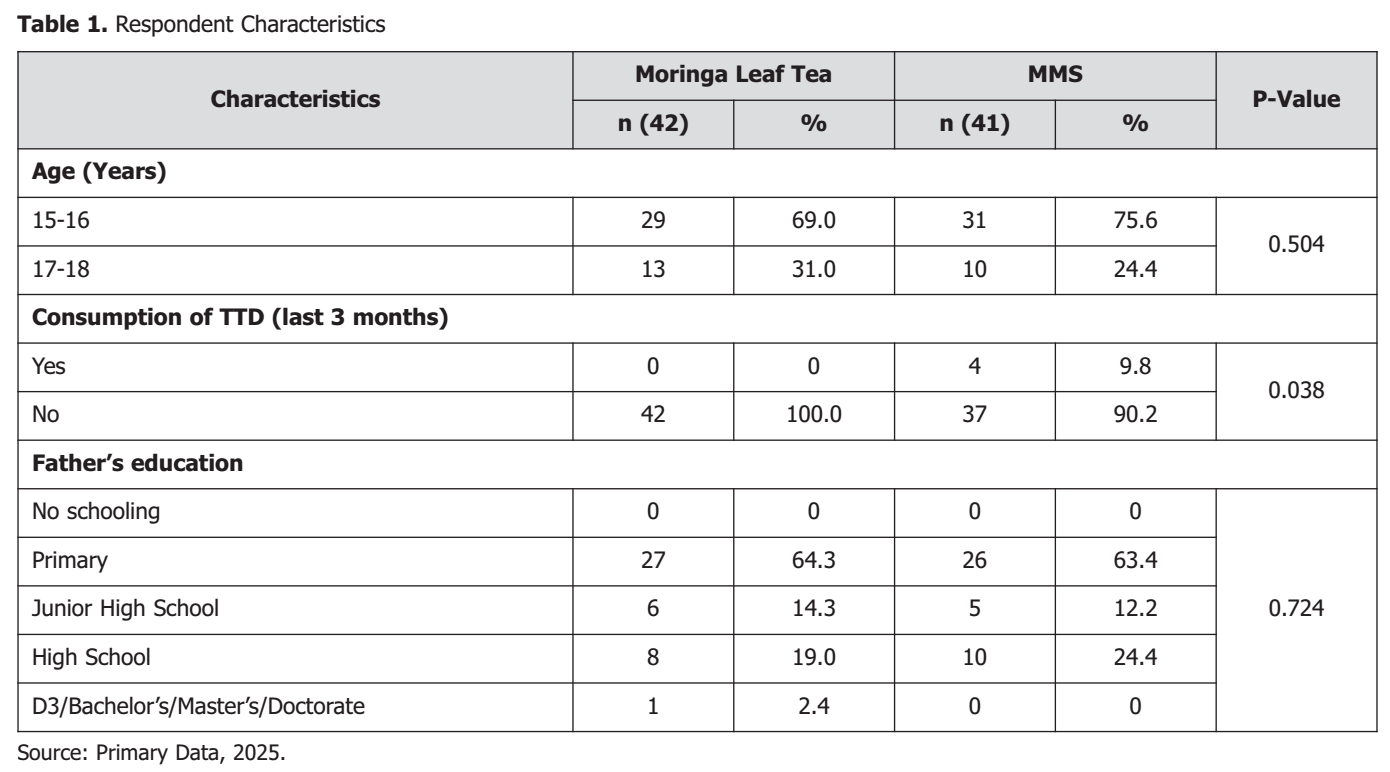
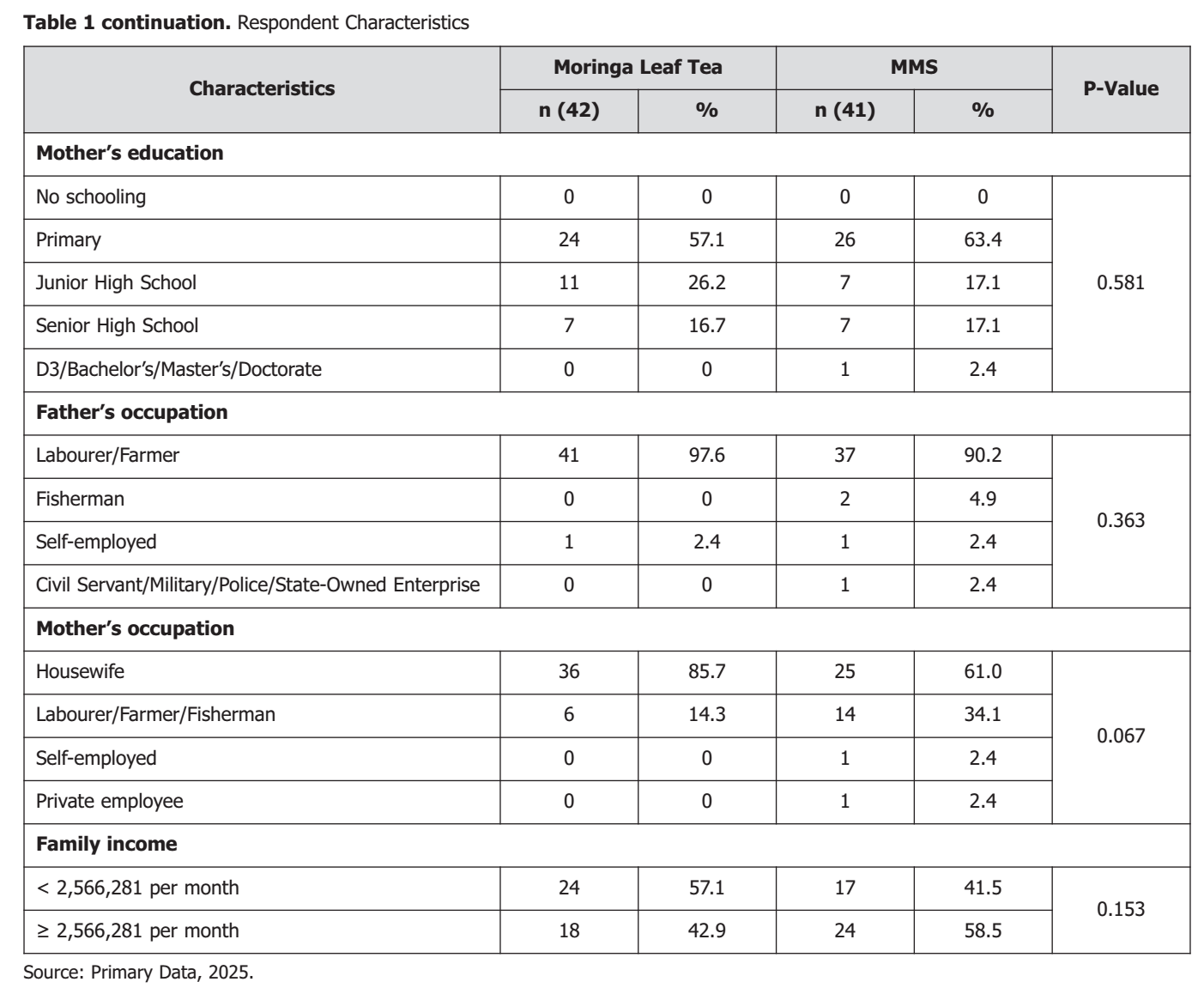
Furthermore, in terms of family income, the intervention group had an income of <Rp2,566,281 per month (57.1%), while the control group had a higher income of ≥Rp2,566,281 (58.5%). Regarding TTD consumption behaviour in the last three months, all respondents (100%) in the intervention group did not consume TTD because there was no distribution from the community health centre. In contrast, in the control group, 9.8% of respondents consumed TTD, although the majority (90.2%) never consumed it.
Most variables showed no significant differences between the intervention and control groups (p>0.05), indicating relatively comparable baseline conditions. However, there was a significant difference in iron supplement (TTD) consumption (p<0.05), indicating an initial imbalance in this variable.
Table 2. shows that after 12 weeks of intervention, the moringa leaf tea group showed a greater mean increase in BMI-for-age Z-score (BAZ) compared to the MMS group. The mean change before and after intervention in the intervention group was 1.15 ± 0.60 SD, while the control group showed a change of 0.50 ± 0.18 SD.
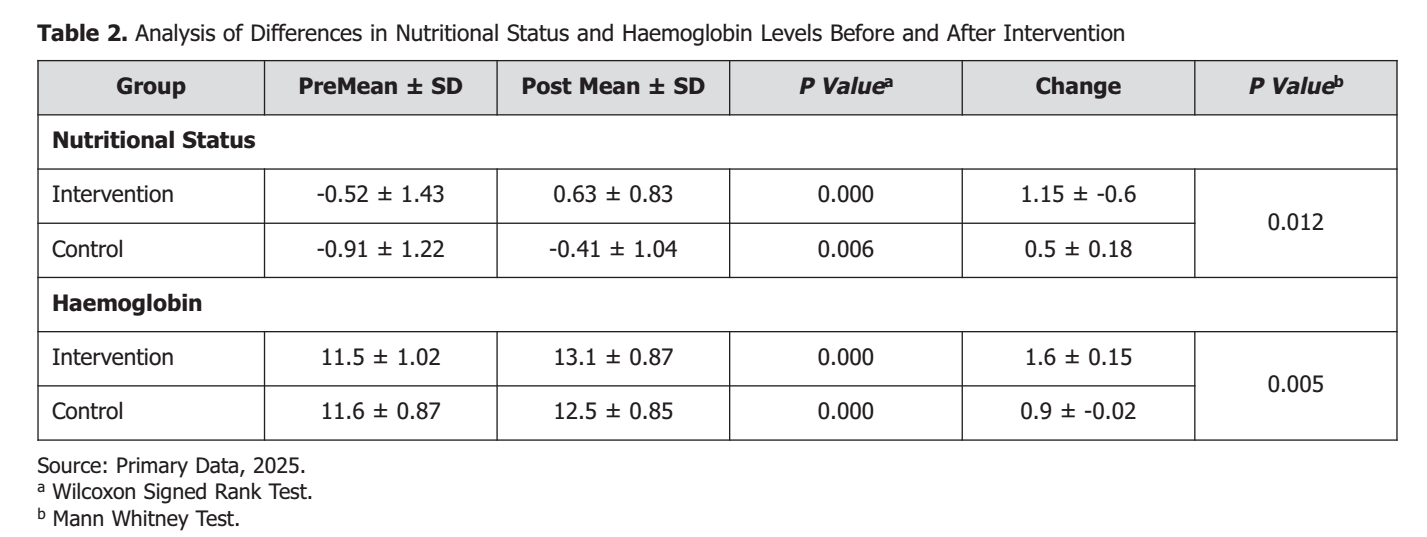
Within-group analysis using the Wilcoxon test indicated significant improvements in BAZ in both groups (p<0.05). The comparison of change scores between groups using the Mann–Whitney U test demonstrated a statistically significant difference favoring the intervention group (p=0.006).
For haemoglobin levels both groups experienced significant increases in haemoglobin levels after the intervention period based on the Wilcoxon test (p<0.05). The moringa leaf tea group demonstrated a larger mean increase (+1.6 g/dL) compared with the MMS group (+0.9 g/dL). Between-group analysis of haemoglobin change using the Mann–Whitney U test revealed a statistically significant difference (p<0.05).
DISCUSSION
Nutritional status is a condition determined by the degree of physical need for energy and nutrients obtained from food and nutrition, the physical effects of which can be measured24. Nutritional status is closely related to the food consumed, nutrients, and the body’s intake requirements. Nutritional adequacy is crucial at various ages. Nutritional adequacy plays a role in determining individuals who are of high quality, healthy, intelligent, and productive25. Nutritional problems that arise in adolescents need to be detected as early as possible so that they can be addressed promptly. Monitoring nutritional status through anthropometry is one of the direct methods of assessing nutritional status that can be used to identify imbalances in energy and protein intake26.
Table 2 shows that the average improvement in nutritional status was greater in the intervention group. These findings reinforce the evidence that the content of moringa leaf tea is closely related to improved nutritional status. Internationally, research by Gopalakrishnan, also supports that the high micronutrient content and essential amino acids in moringa leaves can improve nutritional status and metabolic balance in adolescents and young adults. Bioactive compounds such as isothiocyanates, flavonoids, and polyphenols found in moringa leaves are also known to play a role in increasing metabolic efficiency and nutrient absorption in the digestive tract, thereby supporting weight gain and nutritional status27.
Consumption of moringa leaf tea for 12 weeks in this study had a significant impact on improving the nutritional status of adolescent girls. Weight gain in the intervention group showed that the nutrients contained in moringa leaves were able to contribute to energy balance and metabolism in the body. The mechanism of weight gain occurs through increased energy intake from carbohydrates, proteins, and fats, which, if not immediately used by the body, will be stored in the form of adipose tissue. In addition, vitamin B1 (thiamine) and zinc minerals play an important role in increasing appetite by affecting digestive enzyme activity and central nervous system function.
Table 2 on haemoglobin levels shows that in this study, almost all respondents at the beginning of the measurement had mild to moderate anaemia. This shows that adolescent girls in the study location are a vulnerable group that needs appropriate nutritional intervention. Adolescent girls are a group at high risk of anaemia because they lose 1.3 mg of iron per day during each menstrual cycle, compounded by inadequate iron intake
Moringa leaves are a plant-based source rich in micronutrients, particularly iron (Fe), vitamin C, folic acid, and protein, which play a crucial role in the formation of haemoglobin in the body. Iron is a major component of haemoglobin, a protein in red blood cells that transports oxygen from the lungs to all tissues in the body. However, iron absorption from plant sources such as moringa leaves is classified as non-haem, which is less absorbable than haem iron from animal products. This is where vitamin C in moringa leaves plays an important role in reducing iron ions from ferric (Fe3+) to ferrous (Fe2+) form, which is more easily absorbed by the small intestine mucosa. This process increases iron bioavailability and the efficiency of haemoglobin formation in the bone marrow.
This shows that consuming moringa leaf tea is more effective in increasing haemoglobin levels than administering MMS to adolescent girls. When anaemia occurs, there is an increase in iron absorption due to high iron requirements. High vitamin C increases iron bioavailability and has been shown to increase iron absorption from non-haem sources up to fourfold, which plays a role in increasing iron absorption and metabolism28.
Research22 on rural adolescent girls in Bangladesh showed that the average haemoglobin level before the moringa leaf intervention was 12.04 g/dL, which increased to 13.31 g/dL after the intervention, meaning that moringa leaves have high potential in increasing haemoglobin levels. Astuti and Idealistiana’s study on the administration of moringa leaf tea to anaemic adolescent girls at SMP Negeri 1 Sukau Lampung, the results of the paired t-test statistical analysis obtained a p-value of 0.000 (p<0.05). This indicates that there is a significant difference between haemoglobin levels before and after the administration of moringa leaf tea20.
Another study conducted by Tirtawati on adolescent girls in Manado showed that the average haemoglobin level before intervention was 10.71 g/dL, and after 30 days of intervention, the average was 11.63 g/dL with a p-value < 0.000, where p < 0.05. These results indicate a difference in moringa leaf tea consumption before and after intervention29. In line with the study30 at Dr Soepraoen Hospital in Malang, it was found that before the administration of moringa leaf tea, 22 (68.7%) had mild anaemia and 10 (31.3%) had moderate anaemia.
The better results in the moringa leaf tea group were due to the synergy between iron and natural vitamin C found in moringa leaves, which increased the absorption of non-haem iron in the intestine. In addition, the protein and antioxidant content in moringa leaves also supported the haematopoiesis process. Thus, moringa leaf tea can be an affordable, natural, and effective local alternative in supporting the achievement of anaemia reduction targets in adolescents.
However, there are limitations to this study. First, the study design used a quasi-experiment with MMS as a comparison, but only involved two schools in one region, so the results cannot be widely generalised. Second, the duration of the intervention was relatively short (12 weeks), so its impact on iron reserves (serum ferritin) cannot be ascertained. A long-term study of more than 26 weeks, as recommended by international research, is needed to observe the sustained effects.
Overall, this study makes an important contribution by showing that moringa leaves not only improve nutritional status but also act as a natural therapeutic agent in treating anaemia. These results support the use of local foods in adolescent health programmes, in line with the school-based nutrition intervention approach recommended by the WHO. The integration of moringa leaves into school-based nutrition programmes, such as UKS or Aksi Bergizi, has the potential to be an effective, sustainable, and contextual strategy for reducing the prevalence of anaemia and improving the nutritional status of adolescent girls in Indonesia.
CONCLUSION
Implementation of the “Nutrition Action” school-based program, which provided moringa leaf tea and multi-micronutrient supplements, was associated with improved nutritional status and hemoglobin levels in adolescent girls. These findings demonstrate that moringa leaf tea has the potential to be a promising food-based nutrition strategy to support adolescent health in senior high schools in Indonesia.
REFERENCES
- Unicef. (2021). Adolescent Nutrition Programme: From Pilot Districts to National Expansion. Unicef, 1–12.
- Christian & Smith, E. (2018). Adolescent Undernutrition: Global Burden, Physiology, and Nutritional Risks. Annals of Nutrition and Metabolism, 72(4), 316–328. 72(4).
- WHO. (2021). World Health Statistics 2021: Monitoring Health for the SDGs.
- Chalise, B., Aryal, K. K., Mehta, R. K., Dhimal, M., Sapkota, F., Mehata, S., Karki, K. B., Madjdian, D., Patton, G., & Sawyer, S. (2018). Prevalence and correlates of anaemia among adolescents in Nepal: Findings from a nationally representative cross-sectional survey. PLoS ONE, 13(12), 1–11. https://doi.org/10.1371/journal.pone.0208878
- Gosdin, L., Tripp, K., Mahama, A. B., Quarshie, K., Amoaful, E. F., Selenje, L., Sharma, D., Jefferds, M. E., Sharma, A. J., Whitehead, R. D., Suchdev, P. S., Ramakrishnan, U., Martorell, R., & Addo, O. Y. (2020). Predictors of anaemia among adolescent schoolchildren of Ghana. Journal of Nutritional Science, 9, 1–11. https://doi.org/10.1017/jns.2020.35
- McLoughlin, G. (2020). Intermittent iron supplementation for reducing anaemia and its associated impairments in adolescent and adult menstruating women. International Journal of Evidence-Based Healthcare, 18(2), 274–275. https://doi.org/10.1097/XEB.0000000000000212
- Riskesdas. (2018). Main Results of the Basic Health Research (RISKESDAS). Riskesdas, 76.
- Risma, & Hadju, V. (2024). Adolescent Girls: A Cross Sectional Study in Banggai District. Indonesia. Pharmacogn J, 16(2), 1–5. www.phcogj.com:.Phcogj.com
- WHO. (2017). Nutritional Anaemias: Tools for Effective Prevention. In World Health Organization.
- Nurjannah, S. N., & Putri, E. A. (2021). The Relationship Between Nutritional Status and Anaemia in Adolescent Girls at SMP Negeri 2 Garawangi, Kuningan Regency. Journal of Midwifery Care, 1(02), 125–131. https://doi.org/10.34305/jmc.v1i02.266
- Rahayu, T. B. (2020). Analysis of Factors Affecting the Nutritional Status of Adolescent Girls. Journal of Health Vocational Education, 6(1), 46. https://doi.org/10.30602/jvk.v6i1.158
- Pasalina, P. E., & Dianne, Y. (2019). The Relationship Between Body Mass Index and the Incidence of Anaemia. 10(1), 12–20.
- Ministry of Health of the Republic of Indonesia. (2023). Pocket Book on Anaemia Prevention in Pregnant Women and Adolescent Girls. In IEEE Sensors Journal (Vol. 5, Issue 4). http://dx.doi.org/10.1016/j.snb.2010.05.051
- Hoang, N. T. D., Orellana, L., Gibson, R. S., Le, T. D., Worsley, A., Sinclair, A. J., Hoang, N. T. T., & Szymlek-Gay, E. A. (2021). Multiple micronutrient supplementation improves micronutrient status in primary school children in Hai Phong City, Vietnam: a randomised controlled trial. Scientific Reports, 11(1), 1–13. https://doi.org/10.1038/s41598-021-83129-9
- Keats, E. C., Haider, B. A., Tam, E., & Bhutta, Z. A. (2019). Multiple-micronutrient supplementation for women during pregnancy. Cochrane Database of Systematic Reviews, 2019(3). https://doi.org/10.1002/14651858.CD004905.pub6
- Wijianto, W., Said, R., & Galenso, N. (2022). Status Gizi Ibu Hamil dan Kepatuhan Minum Multifle Micronutrien Di 10 Desa Lokus Stunting Di Kabupaten Banggai. Poltekita: Jurnal Ilmu Kesehatan, 16(1), 98–102. https://doi.org/10.33860/jik.v16i1.716
- Nadimin. (2018). The Effect of Vegetable and Fruit Consumption Habits and Passive Smoking on the Total Antioxidant Capacity of Pregnant Women. Jurnal Mkmi, 14 (2), 181–189.
- Risma, R., Hadju, V., Zulkifli, A., Russeng, S. S., Indarty, A., Salam, A., Sudargo, T., & Fandir, A. (2024). Title: Intercorrelations Among Haemoglobin Level, Physical Fitness, and Cognitive Score in Adolescent Girls: a Cross-sectional Study in Banggai District, Indonesia. 16(2), 1–5.
- Ricika, W. (2020). Biomedical Journal of Indonesia. 6(3), 357–363.
- Astuti, Y., & Idealistiana, L. (2024). The effectiveness of Moringa oleifera tea in increasing haemoglobin levels in adolescent girls with anaemia. Malahayati Nursing Journal, 6(7), 2644–2655. https://doi.org/10.33024/mnj.v6i7.11418
- Fauziyah, N., Handayani, F., & Agustina, H. S. (2023). Manajemen Pencegahan Dan Penanggulangan Anemia Pada Remaja Putri Dengan Teh Daun Kelor. Jurnal Skolastik …, 9(2), 206–216. https://jurnal.unai.edu/index.php/jsk/article/view/3250
- Khanam, M. (2022). Effects of Moringa oleifera leaves on haemoglobin and serum retinol levels and underweight status among adolescent girls in rural Bangladesh. Frontiers in Nutrition, 9. https://doi.org/10.3389/fnut.2022.959890 https://doi.org/10.33860/jik.v16i1.716
- World Health Organization. (2007). WHO reference 2007 for children and adolescents (5–19 years). Geneva: World Health Organization.
- Andya, M. D. (2022). The Relationship Between Physical Activity and Dietary Patterns on Nutritional Status in Adolescents. 5, 269–277.
- Fitrini Kurnia. (2014). The relationship between food intake and the incidence of anaemia and practical scores among grade XI culinary students at SMKN 1 Buduran Sidoarjo. E-Journal Boga, 03(1), 46–53.
- Chahyanto, B. A., Sasmita, R., & Tobing, V. L. (2024). Overview of the Nutritional Status of Junior High School Students in Sibolga City. ASSYIFA: Journal of Health Sciences, 2(1), 65–80. https://doi.org/10.62085/ajk.v2i1.42
- Gopalakrishnan, L., Doriya, K., & Kumar, D. S. (2016). Moringa oleifera: A review on nutritive importance and its medicinal application. Food Science and Human Wellness, 5 (2), 49–56. https://doi.org/10.1016/j.fshw.2016.04.001
- Pavord, S., Myers, B., Robinson, S., Allard, S., Strong, J., & Oppenheimer, C. (2022). UK guidelines on the management of iron deficiency in pregnancy. British Journal of Haematology, 156(5), 588–600. https://doi.org/10.1111/j.1365-2141.2011.09012.x
- Tirtawati, G. A., Kusmiyati, K., Purwandari, A., Donsu, A., Korompis, M., Wahyuni, W., Kuhu, F., Keintjem, F., Tuju, S., Rompas, R., & Montolalu, A. (2021). Moringa oleifera teabags increase haemoglobin in adolescent females. Open Access Macedonian Journal of Medical Sciences, 9(A), 393–396. https://doi.org/10.3889/oamjms.2021.6270
- Veronika, R. (2021). The effect of moringa leaf tea on haemoglobin levels in adolescent females at ITS RS DR.Soepraoen Hospital, Malang City. Proceedings of the National Health Information Seminar, 1(22), 134–139. https://ojs.udb.ac.id/index.php/sikenas/issue/view/147
Explorar
Artículos
Volúmenes
Sobre la revista
Más leídos
Consumo de bebidas energizantes y efectos adversos en la salud de estudiantes universitarios
Nutrición Clínica y Dietética Hospitalaria
Uso de redes sociales y riesgo de trastornos de conducta alimentaria en adolescentes mujeres de un colegio en Lima, Perú
Nutrición Clínica y Dietética Hospitalaria
Consumo de bebidas energizantes en estudiantes universitarios y sus factores asociados.
Nutrición Clínica y Dietética Hospitalaria
Microbiota intestinal y eje intestino-cerebro: una revisión de su interacción con el sistema nervioso central
Nutrición Clínica y Dietética Hospitalaria
Factores asociados a la diabetes mellitus tipo 2 de la población adulta peruana.
Nutrición Clínica y Dietética Hospitalaria