Artículo original
Vol. 46 Núm. 1 (2026)
18 min
Optimizing the growth of malnourished toddlers through the provision of multivitamin functional snacks
Optimizing the Growth of Malnourished Toddlers through the Provision of Multivitamin Functional Snacks.
Nadimin NADIMIN, Hijrah ASIKIN
Department of Nutrition, Health Polytechnic, Ministry of Health Makassar, Indonesia.
*Correspondencia:
Nadimin nadimin@poltekkes-mks.ac.id
Recepción:
13/01/2026
Aceptación:
28/02/2026
Publicación:
04/03/2026
Cómo citar
Nadimin NADIMIN, Hijrah ASIKIN. Optimizing the growth of malnourished toddlers through the provision of multivitamin functional snacks. Nutr Clín Diet Hosp. 2026; 46(1):341-348 DOI: 10.12873/461nnadimin
Métricas
275
Visualizaciones
83
Descargas
Compartir
Compartir
Resumen (EN)
Background: Malnutrition remains a significant public health concern among under-five children, leading to impaired growth and development. Locally produced functional foods using nutrient-dense ingredients may provide a sustainable strategy to improve nutritional status. This study assessed the effect of a multi-nutrient functional snack (TUMIZ) on growth outcomes in malnourished toddlers.
Methods: A randomized pretest–posttest controlled clinical trial was conducted among 70 malnourished toddlers who were recruited without grouping based on severity. Participants were randomly assigned to receive either daily TUMIZ biscuits plus maternal nutrition education (intervention group) or nutrition education alone (control group) for 60 days. Weight, height, and insulin-like growth factor-1 (IGF-1) levels were measured before and after the intervention. Growth measurements and intervention implementation were carried out by different personnel. Data were analyzed using paired t-test, independent t-tests and ANCOVA test.
Results: Both groups showed significant improvements in weight and height; however, gains were significantly greater in the intervention group (p<0.05). IGF-1 levels increased significantly in the intervention group (p=0.001), with greater changes compared to controls (p=0.027).
Conclusion: TUMIZ supplementation effectively improves weight gain and IGF-1 levels, supporting its potential as a locally based nutritional intervention for malnourished toddlers.
Palabras clave (EN):
Malnourished
Functional snack
Multi-nutrient
Child growth
INTRODUCTION
Malnutrition remains a significant public health problem in developing countries, especially among children under 5 years of age, with impacts on linear growth and cognitive development. Food-based interventions have become an important approach to meeting children’s essential nutritional needs, including the use of functional foods rich in bioactive compounds and micronutrients to support nutritional status and the immune system. Functional foods are seen as an innovative strategy to provide additional nutrients and benefits beyond basic energy requirements, such as amino acids, vitamins, minerals, and antioxidants that contribute to children’s health1,2.
Indonesia has a wealth of local food ingredients that have the potential to be developed into functional foods, including plant and animal protein sources such as soybeans, mung beans, carrots, and edible insects such as sago worms. The use of local ingredients not only increases the availability of nutritious foods but also supports food security and the sustainability of community-based food systems. Literature reviews show that edible insects are high in protein and unsaturated fatty acids, which can play a role in improving nutritional status and food security3,4.
Despite the availability of many nutritious local food sources, toddlers in many remote areas still suffer from malnutrition due to limited access, monotonous diets, and low acceptance of innovative foods by children. Deficiencies in quality protein and micronutrients such as vitamin A and iron are also often reported as major factors in the persistence of malnutrition in toddlers. These barriers reduce the effectiveness of conventional food interventions in significantly improving children’s nutritional status5,6. Common nutritional solutions that have been implemented include vitamin-mineral supplementation, ready-to-use supplementary food (RUSF) provision, family nutrition education, and health-based community programs. Milk-based or imported ingredient-based RUSF/RUTF programs have shown results in helping short-term nutritional recovery in malnourished children, but are often unsustainable and underutilize local ingredients7,8.
Previous studies have shown that products based on bean flour, vegetable flour, and functional supplements can increase the nutritional value of supplementary foods. For example, substituting mung bean flour and carrot flour in biscuits increases the protein content and organoleptic value of snack products, demonstrating the potential of plant-based ingredients to increase the nutrient density of children’s foods9,6. Research on the development of locally sourced RUSF, such as combinations of tubers, nuts, and other ingredients, also shows that these products can meet most macronutrient requirements and are acceptable to children, although additional fortification is needed to meet the micronutrient requirements of children with mild to moderate acute malnutrition9,10.
Several local studies have shown the use of functional ingredients for complementary foods, but empirical evidence linking the consumption of functional snacks based on soybean flour, mung beans, carrots, and sago worms to the growth of malnourished toddlers is still limited. Further research is needed to evaluate the impact of innovative functional foods on anthropometric indicators and children’s nutritional status in real-world community settings. This study proposes the development of functional snacks made from local ingredients (soybean flour, mung bean flour, carrot flour, and sago worm flour), which have not been widely studied in terms of their effect on the growth of malnourished toddlers. This study aims to examine the effect of consuming these functional snacks on children’s growth parameters (weight, height, and nutritional status) and sensory acceptance of the product, as a sustainable local food intervention innovation relevant to community needs.
METHODS
Study Design
This study used a randomized pretest–posttest controlled clinical trial design. Families with malnourished toddlers, including those classified as stunted, wasted, or underweight based on height-for-age, weight-for-height, and weight-forage indices, were screened for eligibility. Baseline assessments included measurements of body weight, height, and dietary intake. Eligible participants were randomly assigned to either an intervention or a control group using simple randomization. The intervention group received daily Tumiz functional biscuits in addition to maternal nutrition education, while the control group received nutrition education only. The intervention was implemented over a two-month period, comprising 60 consecutive feeding days, to evaluate the effect of Tumiz supplementation on child growth outcomes.
Sample
The study sample consisted of mothers with toddlers (aged 1-5 years) who were malnourished and classified as stunted, wasted, or underweight (z-score < −2 SD), living in the working area of the Paccerakkang Community Health Center in Makassar City, Indonesia. Participants were recruited regardless of the classification of the severity of malnutrition and age classification. A total of 35 participants were recruited for each group using a random sampling method.
This approach reflects common malnutrition conditions at the Posyandu level and enables comprehensive evaluation of intervention effectiveness in undernourished children under five. Stratification by malnutrition type was not performed due to limited sample sizes, which could reduce statistical power and increase type II error risk. Therefore, analysis focused on overall intervention effects.
Data Collection
Data collected in this study encompassed maternal childfeeding practices, Tumiz biscuit consumption, child growth, and toddler nutritional status. Information on feeding practices was obtained through structured interviews using standardized questionnaires. Tumiz biscuit consumption was monitored daily using a consumption control sheet with a checklist format. Child growth was evaluated using anthropometric indicators, including changes in body weight, height, and insulin-like growth factor-1 (IGF-1) levels. Body weight was measured using a digital scale with a precision of 0.1 kg, while height was measured using a microtoise. Child age was verified using birth records provided by parents or documented on the child health card (KMS). All measurements were conducted by trained personnel, including nutrition staff from public health centers and enumerators with a D4 qualification in nutrition.
Data were collected by independent field officers who were not involved in the intervention or subject allocation and were blinded to group assignments to minimize measurement bias. Due to the open-label design, participants and implementers could not be blinded. All officers received prior training and standardization in anthropometric procedures. Weight and height were measured twice, with repeat measurements if discrepancies exceeded 0.1 kg or 0.5 cm. Age was calculated in months to determine WHO Z-scores.
Data Analysis
All collected data were entered into statistical software for analysis. Univariate and bivariate analyses were performed. Univariate analysis involved calculating means and standard deviations (SD) for variables such as, body weight, body height/length, and IGF-1 levels. Bivariate analysis was conducted to evaluate changes in growth indicators before and after the intervention within each group. Furthermore, a covariate analysis (ANCOVA) was performed to control for the influence of morbidity history variables in the baseline data on increases in weight, height, and IGF-1 levels. Statistical significance was determined at a 95% confidence level.
Ethical Considerations
The study was carried out after obtaining ethical approval from the Health Research Ethics Committee of Poltekkes Kemenkes Makassar (No. 1133/M/KEPK-PTKMS/VII/2024). Prior to data collection, including interviews and blood sampling, written informed consent was obtained from all participating mothers.
RESULTS
Characteristics of Parents
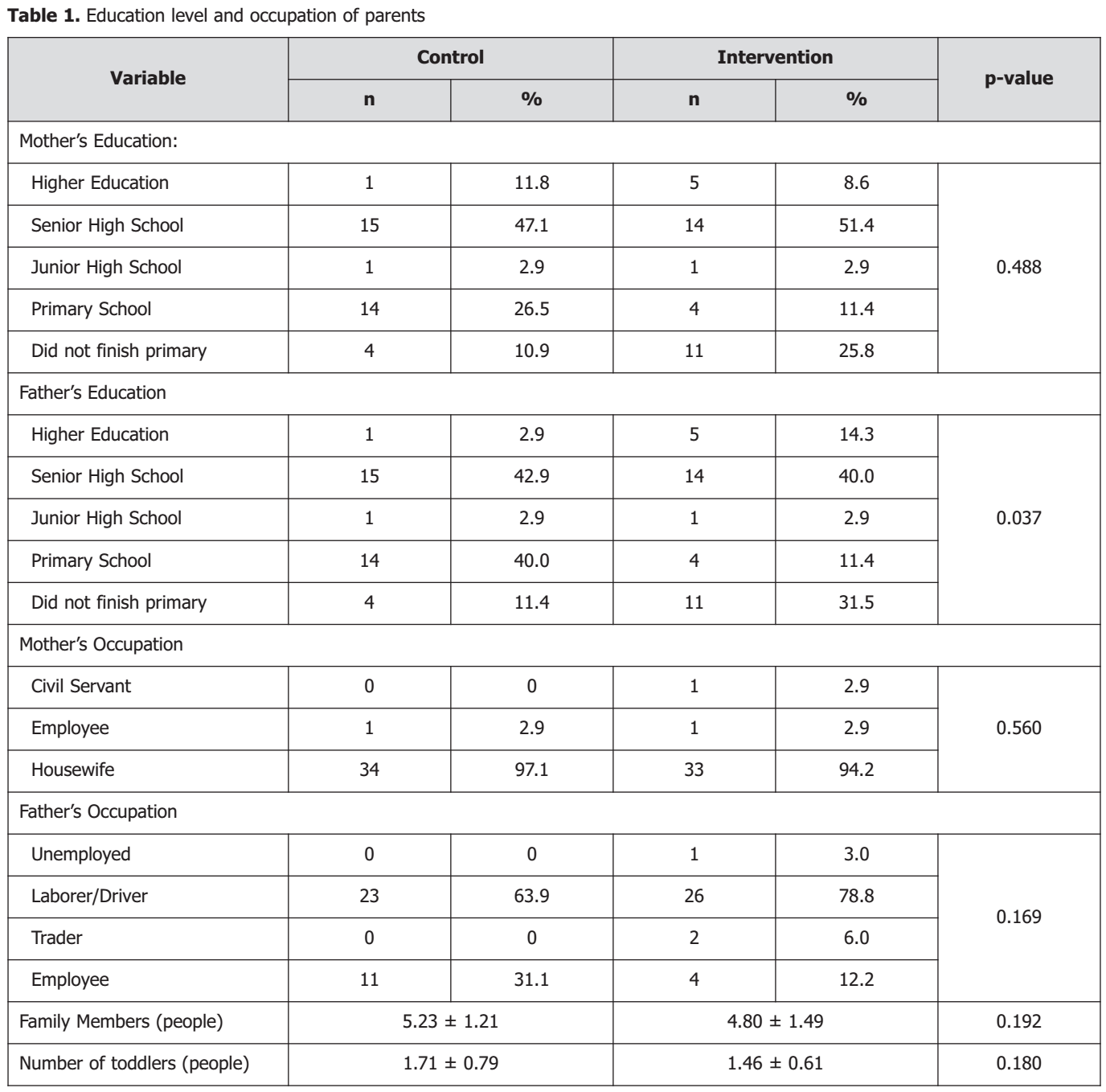
Table 1 shows that most mothers in both control (47.1%) and intervention (51.4%) groups had completed senior high school. Although a higher proportion of mothers with incomplete elementary education was observed in the intervention group, the difference was not statistically significant (p = 0.488). Most fathers also had a senior high school education; however, significantly more fathers with incomplete elementary education were found in the intervention group (p = 0.037). The majority of mothers were housewives (p = 0.560), and most fathers worked as laborers or drivers (p = 0.169). Family size and number of toddlers were comparable between groups.
Child’s Health Condition
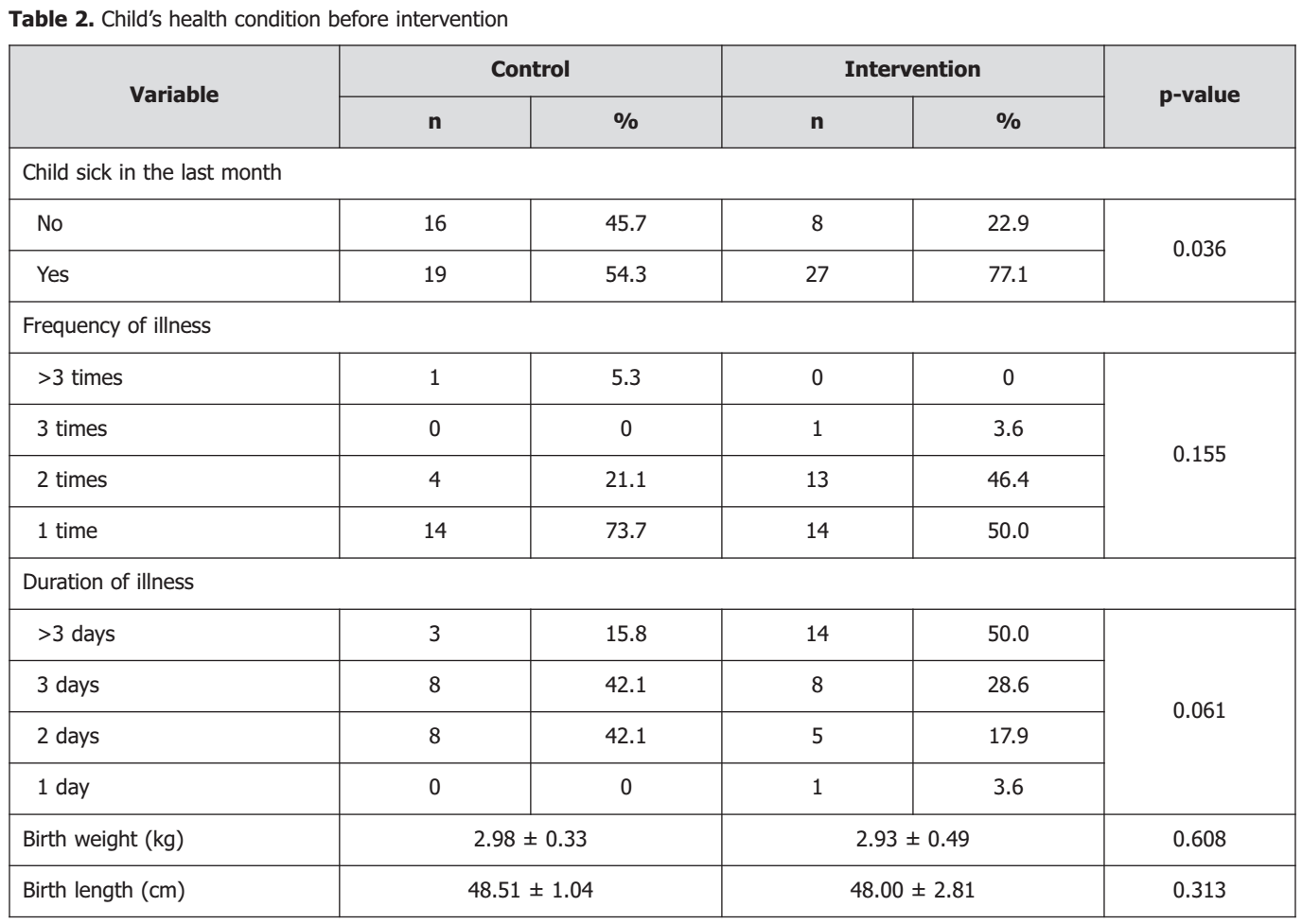
As presented in Table 2, the prevalence of illness in the past month was significantly higher in the intervention group (77.1%) than in the control group (54.3%) (p = 0.036). While illness frequency did not differ significantly between groups (p = 0.155), children in the intervention group exhibited a longer duration of illness compared with controls (p = 0.061).
Child’s Dietary Pattern
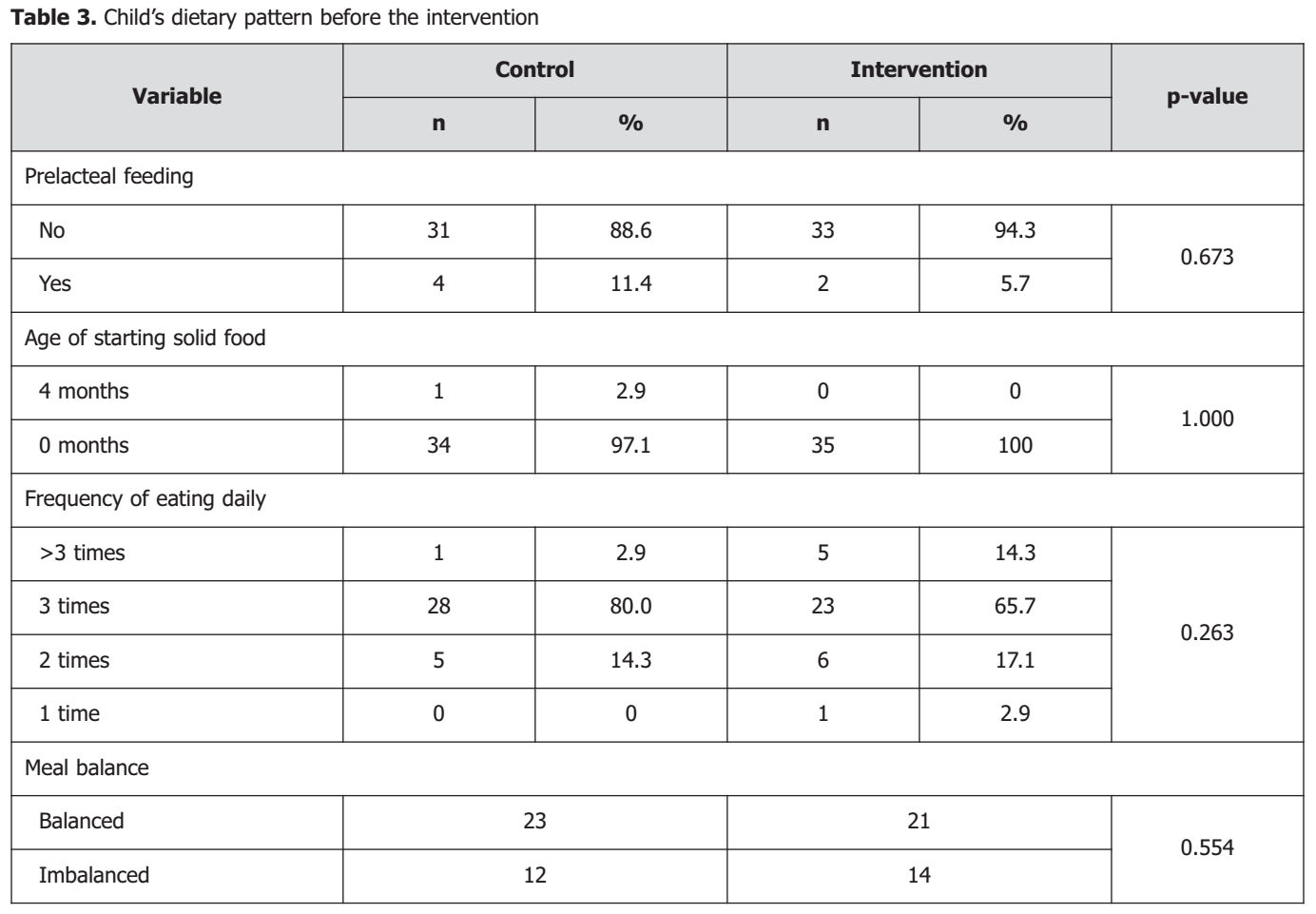
Table 3 shows that most children in both groups were not given prelacteal feeding and started complementary feeding at six months, with no significant differences between groups (p = 0.673; p = 1.000). Most children consumed three meals per day, and this pattern was comparable between groups (p = 0.263). Furthermore, there were no statistically significant differences in portion adequacy or in the consumption of balanced and diverse foods between the two groups.
Child growth
Both groups experienced significant gains in body weight and height; however, the increases were consistently greater in the intervention group (p=0.000). Increases in IGF-1 levels were statistically significant only in the intervention group following the intervention (p=0.001), whereas changes in the control group were not significant (p=0.202). As shown in Table 4, there was a significantly higher increase in growth indicators in the intervention group compared to the control group, particularly in terms of weight gain (p=0.001) and IGF-1 levels (p=0.027). In contrast, there was no significant difference in height gain between the intervention group and the control group (p=0.342).
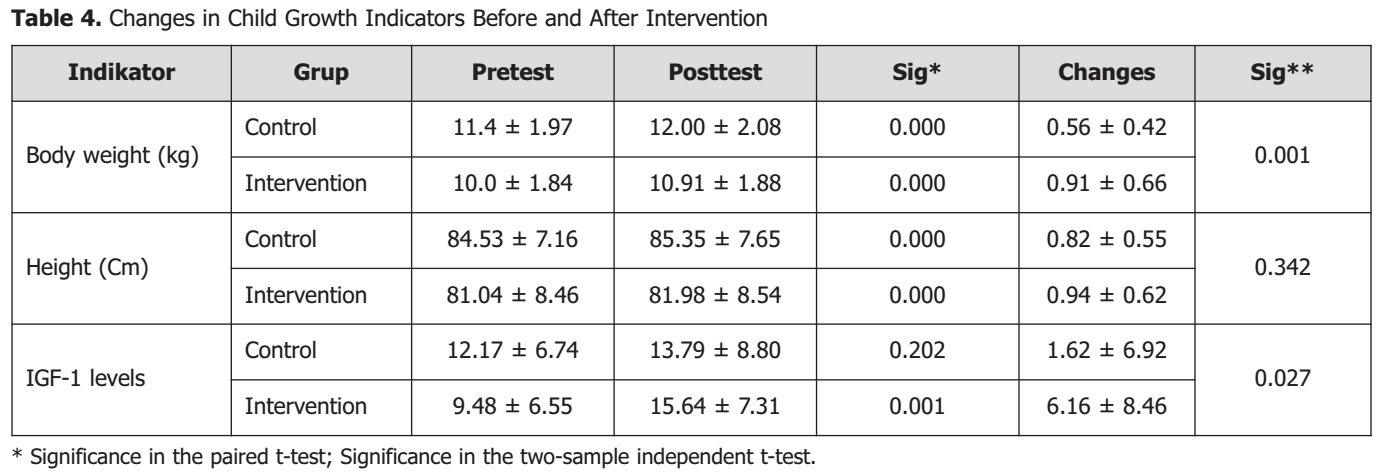
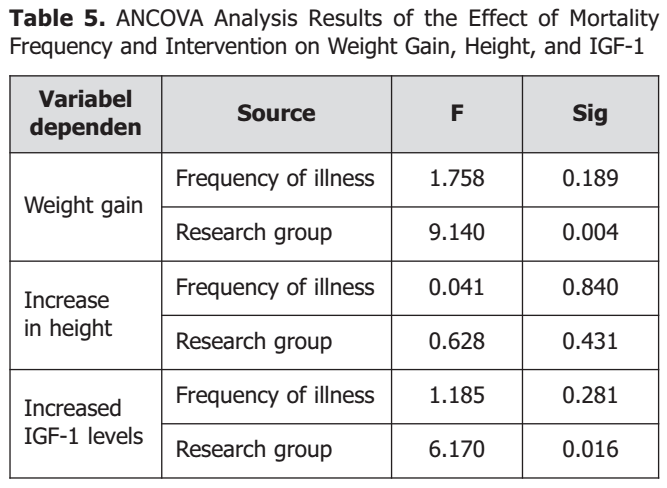
Covariance analysis (ANCOVA) showed that the frequency of illness had no significant effect on weight gain (p = 0.189), height (p = 0.840), or IGF-1 levels (p = 0.281). After controlling for illness frequency, the Tumiz Biscuit intervention group experienced a significant increase in weight compared to the control group (F = 9.140; p = 0.004). In addition, the increase in IGF-1 levels was also significant in the intervention group (F = 6.170; p = 0.016), indicating an improvement in hormonal growth response. However, there was no significant difference in height increase (p = 0.431). These findings indicate the effectiveness of the intervention on short-term growth, but it has not yet had an impact on linear growth.
DISCUSSION
The significantly greater weight gain observed in the intervention group confirms the effectiveness of Tumiz functional biscuits in improving short-term growth outcomes among malnourished children. The nearly twofold higher average weight gain compared with the control group highlights the role of energy- and protein-dense supplementation in accelerating weight recovery11. This finding aligns with previous studies demonstrating that protein-energy supplementation significantly improves body weight in children with malnutrition and wasting12. Adequate energy intake is fundamental for restoring positive energy balance, promoting tissue accretion, and improving overall nutritional status13. These results reinforce the importance of nutrient-dense complementary foods in community-based nutrition programs.
In contrast, no significant difference in height gain was observed. Linear growth is biologically slower and reflects longterm cumulative processes rather than short-term nutritional changes14. Bone elongation depends on chondrocyte proliferation and differentiation at the epiphyseal growth plate, regulated by hormonal signals, sustained nutritional adequacy, and absence of chronic inflammation15. Although IGF-1 is a central mediator of linear growth, short-term elevations in circulating IGF-1 may not immediately translate into measurable height increments because growth plate activity requires prolonged hormonal and nutritional stimulation15,16. Thus, the 60-day intervention period may have been insufficient to demonstrate significant changes in stature.
Chronic malnutrition and inflammation may further blunt linear growth responses. Evidence indicates that prolonged undernutrition can induce partial resistance in the GH/IGF-1 axis, limiting anabolic signaling despite improved dietary intake17. Inflammatory cytokines may suppress hepatic IGF-1 synthesis and modify IGF-binding proteins (IGFBPs), thereby reducing IGF-1 bioavailability at target tissues18. These mechanisms help explain why improvements in nutrient intake do not always produce immediate linear growth acceleration.
The marked increase in IGF-1 levels in the intervention group suggests that Tumiz supplementation positively influenced endocrine regulation of growth. The fourfold greater increase compared with the control group reflects improved hormonal recovery among malnourished children. Adequate high-quality protein intake stimulates IGF-1 production, which is closely associated with somatic growth19. Previous studies confirm that nutritional supplementation can significantly elevate IGF-1 levels in malnourished and stunted children19, and higher IGF-1 concentrations are correlated with greater gains in weight and height during rehabilitation20 Improvements in IGF-1 also reflect enhanced nutritional status and metabolic recovery, supporting the role of functional food–based interventions in growth promotion21.
Although paternal educational levels differed between groups, the intervention remained effective. Evidence suggests that well-designed, targeted, and consistently implemented nutrition programs can yield positive outcomes regardless of socioeconomic or parental education differences22. Integrated and community-based nutrition strategies have been shown to significantly improve child nutritional status across diverse family backgrounds23. These findings suggest that the biological impact of adequate nutrient intake may outweigh certain social disparities when interventions are properly structured.
Interestingly, children in the intervention group had higher morbidity before the program but still experienced significant growth improvements. Frequent illness is a recognized risk factor for malnutrition; however, appropriate nutritional support can mitigate its adverse effects23. Nutritional supplementation enhances immune function, reduces infection severity, and accelerates recovery24. Even in populations with high disease burden, balanced nutrient intake allows growth improvement to occur. Poor baseline health does not necessarily hinder intervention success when nutritional requirements are adequately addressed25. Comprehensive nutritional strategies have been shown to improve both health status and anthropometric outcomes among children with recurrent illness31.
Despite generally unbalanced baseline diets, functional food supplementation effectively improved nutritional outcomes. Deficiencies resulting from inadequate daily intake can be compensated through targeted supplementary feeding27. Evidence indicates that supplementation remains beneficial even when habitual diets are suboptimal29, and fortified foods can enhance nutrient intake and health indicators among children with poor dietary diversity30. This supports the practicality of food-based interventions in resource-limited settings.
Illness frequency during the intervention was not significantly associated with anthropometric or IGF-1 changes, possibly because reported episodes were acute and insufficient to disrupt the GH/IGF-1 axis substantially31. Nonetheless, chronic inflammation is known to impair linear growth through growth hormone resistance and reduced tissue responsiveness to IGF-132. Therefore, inflammatory burden should be considered when evaluating long-term growth responses.
Physiologically, energy-protein supplementation via Tumiz biscuits likely improved macronutrient status, enhanced growth hormone regulation, and increased circulating IGF-1, promoting catch-up weight gain. However, achieving measurable linear growth likely requires longer intervention duration and concurrent strategies addressing infection and inflammation, which may otherwise constrain growth axis responsiveness14.
These findings support the use of locally based, multivitamin-fortified snacks as part of stunting prevention strategies. Integration of Tumiz into community health platforms such as Posyandu, local supplementary feeding programs, and family nutrition education may enhance sustainable growth improvements.
This study has several limitations, including differences in baseline anthropometric data, IGF-1 levels, and prior morbidity, particularly higher disease frequency in the intervention group, which may have influenced post-intervention changes. The heterogeneity of malnutrition status, the short duration of the intervention (60 days), and implementation in a single location also limit generalizability. Future studies with longer follow-up periods, stratified sampling, and strict allocation concealment are needed.
CONCLUSION AND RECOMMENDATIONS
The administration of Tumiz functional biscuits can increase weight gain and IGF-1 hormone levels, but not children’s height. This is evidenced by the increase in weight and IGF-1 hormone levels in the intervention group that consumed Tumiz biscuits.
Further research is recommended using a randomized clinical trial design with a longer intervention duration and larger sample size. Evaluation of the long-term impact on linear growth, cognitive development, and cost-effectiveness is also needed to strengthen the evidence for implementing TUMIZ in stunting prevention programs.
ACKNOWLEDGEMENTS
We are grateful to the Director of the Makassar Health Polytechnic of the Ministry of Health for providing funding for this research. We would like to thank the head of the Pharmacology Laboratory of the Faculty of Medicine, and the Hasanuddin University Medical Research Center (HUM-RC) Laboratory for assisting the implementation of this study.
REFERENCI
- X. Yuan, X.; Zhong, M.; Huang, X.; Hussain, Z.; Ren, M.; Xie, “Industrial Production of Functional Foods for Human Health and Sustainability,” Foods, vol. 13, no. 3546, 2024, doi: https://doi.org/10.3390/foods13223546.
- T. J. Firdausya, “Toddler Development in the Context of Malnutrition: A Systematic Literature Review,” Int. J. Health Sci. (Qassim)., vol. 5, no. 1, hal. 237–250, 2025, doi: https://doi.org/10.55606/ijhs.v5i1.4841.
- & S. D. W. Amelia, V., Arief, Y. S., “Community-Based Intervention for Malnutrition in Children Under Five: A Scoping Review,” J. Ber. Ilmu Keperawatan, vol. 18, no. 1, hal. 138–147, 2025, doi: https://doi.org/10.23917/bik.v18i1.6192.
- A. E. Votsi, I. C., & Koutelidakis, “Functional Foods’ Consumption in Children and Parents: A Literature Review,” Appl. Sci., vol. 14, no. 4, hal. 1492, 2024, doi: https://doi.org/10.3390/app14041492.
- H.-L. Mamun, A. A., Mahmudiono, T., Yudhastuti, R., Triatmaja, N. T., & Chen, “Effectiveness of Food-Based Intervention to Improve the Linear Growth of Children under Five: A Systematic Review and Meta-Analysis,” vol. 15, no. 11, hal. 2430, 2023, doi: https://doi.org/10.3390/nu15112430.
- M. T., R., Lubis, A., Widodo, S., & Muliani, “Functional cookies from Spinach flour: A community-based food innovation to improve child nutritional status,” Priviet Soc. Sci. J., vol. 5, no. 11, hal. 115–124, 2025, doi: https://doi.org/10.55942/pssj.v5i11.799.
- V. A. and J. M. Harriet Torlesse, Vrinda Mehra, Katherine Shats, Claire Johnson, Rowena Merritt, Chika Hayashi, Nita Dalmiya, Mauro Brero, Victor Aguayo and Joan Matji11. Harriet Torlesse, Vrinda Mehra, Katherine Shats, Claire Johnson, Rowena Merritt, Chika Hayashi, Nita, Feeding Profit: How Food Environments Are Failing Children; Child Nutrition Report 2025. New York, 2025.
- H.-K. Fetriyuna, F.; Purwestri, R.C.; Susandy, M.; Köhler, R.; Jati, I.R.A.P.; Wirawan, N.N.; Biesalski, “Composite Flour from Indonesian Local Food Resources to Develop Cereal/Tuber Nut/Bean-Based Ready-to-Use Supplementary Foods for Prevention and Rehabilitation of Moderate Acute Malnutrition in Children,” Foods, vol. 10, no. 3031, 2021, doi: https://doi.org/10.3390/foods10123013.
- Nadimin, Hijrah Asikin. “The effect of providing multi nutrient functional biscuits on the nutritional status of malnourished toddlers,” Healthcare in Low Setting, vol. 13, hal. 137–142, 2025, doi: 10.4081/hls.2024.
- Nadimin, H. Asikin, A. Y. Nyin, L. S. Thien, dan A. Z. Abidin, “Multi nutrient functional biscuits ‘Tumiz’ improve nutritional status and growth of children; A clinical trial in malnourished rats,” Nutr. Clin. y Diet. Hosp., vol. 45, no. 1, hal. 109–116, 2025, doi: 10.12873/451nadimin1.
- C. Liu, “Growth performance and nutrient composition of mealworms (Tenebrio Molitor) fed on fresh plant materials-supplemented diets,” Foods, vol. 9, no. 2, 2020, doi: 10.3390/foods9020151.
- M. Wang, S., Martinez, L., Johnson, “Nutritional Interventions and IGF-1 Levels in Children: Evidence from a Randomized Controlled Trial,” J. Hum. Nutr. Diet., vol. 34, no. 4, hal. 583–590, 2021, doi: https://doi.org/10.1111/jhn.12867.
- N. Nadimin, S. Sirajuddin, S. N. Afifah, V. Hadju, dan B. Bohari, “The effect of nutritional assistance “ Gammara ’ Na ” on food acceptance and nutritional status of children in South Sulawesi, Indonesia,” Nutr. Clin. y Diet. Hosp., vol. 45, no. 1, hal. 38–46, 2025, doi: 10.12873/451nadimin.
- L. P. Victora, C. G., Christian, P., Vidaletti, “Revisiting maternal and child undernutrition in low-income and middle-income countries,” Lancet, vol. 397, no. 10282, hal. 1388–1399, 2021, doi: https://doi.org/10.1016/S0140-6736(21)00394-9.
- E. Inzaghi, “The Effects of Nutrition on Linear Growth,” Nutrients, vol. 14, no. 9, 2022, doi: 10.3390/nu14091752.
- D. B. D. Ong, Ken K, Markus Langkamp, Michael B Ranke, Karen Whitehead, Ieuan A Hughes, Carlo L Acerini, “Insulin-like growth factor I concentrations in infancy predict differential gains in body length and adiposity: The Cambridge Baby Growth Study,” Am. J. Clin. Nutr., vol. 90, no. 1, hal. 156–161, 2009, doi: https://www.sciencedirect.com/science/article/pii/S0002916523231998.
- A. Martín, A. I., Priego, T., Moreno-Ruperez, Á., González-Hedström, D., Granado, M., & López-Calderón, “IGF-1 and IGFBP-3 in Inflammatory Cachexia,” Int. J. Mol. Sci, vol. 22, no. 17, 2021, doi: https://doi.org/10.3390/ijms22179469.
- M. A. S. Holly L Racine, “The Actions of IGF-1 in the Growth Plate and its Role in Postnatal Bone Elongation,” Front. Endocrinol. (Lausanne)., vol. 18, no. 3, hal. 210–227, 2020, doi: https://pmc.ncbi.nlm.nih.gov/articles/PMC7299241/.
- M. Green, B., Gupta, A., Fernandez, “Hormonal Regulation in Malnourished Children: A Review of Nutritional Interventions,” J. Clin. Endocrinol. Metab., vol. 104, no. 12, hal. 5967–5974, 2019, doi: https://doi.org/10.1210/jc.2019-01091.
- Y. Wang, “Effects of different surface-coated nTiO<inf>2</inf> on full-grown carrot plants: Impacts on root splitting, essential elements, and Ti uptake,” J. Hazard. Mater., vol. 402, 2021, doi: 10.1016/j.jhazmat.2020.123768.
- L. Fernandes, M., Yamamoto, T., Zhang, “IGF-1 and Nutritional Recovery in Stunted Children: A Cohort Study,” J. Pediatr. Res., vol. 91, no. 14, hal. 456–464, 2023, doi: https://doi.org/10.1038/s41390-023-01984-3.
- H. Lopez, G., Brown, J., Kim, “Education Level of Parents and Its Impact on the Success of Nutritional Interventions,” J. Glob. Heal. Sci., vol. 2, no. 3, hal. 219–227, 2020, doi: https://doi.org/10.35500/jghs.2020.2.e29.
- S. H. Rodriguez, P., Garcia, M., Lee, “Addressing Chronic Malnutrition: The Role of Nutritional Interventions in Improving Linear Growth,” J. Glob. Health, vol. 11, 2021, doi: https://doi.org/10.7189/jogh.11.04026.
- V. R. Patel, “Cost-effective in-situ remediation technologies for complete mineralization of dyes contaminated soils,” Chemosphere, vol. 243, 2020, doi: 10.1016/j.chemosphere.2019.125253.
- J. Kim, H. S., Zhang, L., Brown, “Protein-Energy Supplementation and Wasting Recovery in Undernourished Children: A Longitudinal Study,” Pediatr. Res., vol. 50, no. 1, hal. 101–110, 2022, doi: https://doi.org/10.1038/pr2022.011.
- K. Y. Kim, H. S., Fernandez, M., Lee, “The Role of Energy Intake in Child Weight Recovery: A Randomized Control Trial,” J. Pediatr. Gastroenterol. Nutr., vol. 74, no. 1, hal. 85–92, 2022, Daring]. Tersedia pada: https://doi.org/10.1097/MPG.0000000000003072
- K. Y. Yamamoto, T., Green, L., Lee, “Nutritional Supplementation in Children with Unbalanced Diets: A Randomized Controlled Trial,” J. Glob. Pediatr., vol. 18, no. 1, hal. 37–48, 2022, doi: https://doi.org/10.1080/24752972.2022.2078752.
- Y. Zhou, Y., Yamamoto, S., Wu, “Effect of Fortified Foods on Linear Growth in Stunted Children: A Double-Blind Randomized Controlled Trial,” Public Health Nutr., vol. 24, no. 10, hal. 3045–3053, 2021, doi: https://doi.org/10.1017/S1368980021001675.
- J. X. Liu, “High-quality genome sequence reveals a young polyploidization and provides insights into cellulose and lignin biosynthesis in water dropwort (Oenanthe sinensis),” Ind. Crops Prod., vol. 193, 2023, doi: 10.1016/j.indcrop.2022.116203.
- G. Smith, R., Martinez, M., Lopez, “Impact of Nutritional Supplements on Growth in Malnourished Children: A Systematic Review,” Nutr. Res. Rev., vol. 32, no. 2, hal. 234–246, 2019, doi: https://doi.org/10.1017/S095442241900011X.
- A. M. DeBoer, M. D., Scharf, R. J., & Leite, “Systemic inflammation, growth factors, and linear growth in the setting of infection and malnutrition,” Nutrition, vol. 33, no. January 2027, hal. 248–253, 2017, doi: https://doi.org/10.1016/j.nut.2016.06.013.
- C. Cammisa, I., Rigante, D., & Cipolla, “A theoretical link between the GH/IGF-1 axis and cytokine family in children: Current knowledge and future perspectives,” Children, vol. 12, no. 4, hal. 495, 2025, doi: https://doi.org/10.3390/children12040495.
Explorar
Artículos
Volúmenes
Sobre la revista
Más leídos
Consumo de bebidas energizantes y efectos adversos en la salud de estudiantes universitarios
Nutrición Clínica y Dietética Hospitalaria
Uso de redes sociales y riesgo de trastornos de conducta alimentaria en adolescentes mujeres de un colegio en Lima, Perú
Nutrición Clínica y Dietética Hospitalaria
Consumo de bebidas energizantes en estudiantes universitarios y sus factores asociados.
Nutrición Clínica y Dietética Hospitalaria
Microbiota intestinal y eje intestino-cerebro: una revisión de su interacción con el sistema nervioso central
Nutrición Clínica y Dietética Hospitalaria
Factores asociados a la diabetes mellitus tipo 2 de la población adulta peruana.
Nutrición Clínica y Dietética Hospitalaria