Artículo original
Vol. 46 Núm. 1 (2026)
10 min
Antenatal breastfeeding counseling: Its impact on early initiation and feeding practices
Aswita AMIR, Lydia FANNY, Rudy HARTONO
Makassar of Health Politechnic.
*Correspondencia:
Rudy Hartono dinomks70@gmail.com
Recepción:
28/01/2026
Aceptación:
01/04/2026
Publicación:
21/04/2026
Cómo citar
Aswita AMIR, Lydia FANNY, Rudy HARTONO. Antenatal breastfeeding counseling: Its impact on early initiation and feeding practices. Nutr Clín Diet Hosp. 2026; 46(1):555-559 DOI: 10.12873/NCDH-2026-28
Métricas
528
Visualizaciones
47
Descargas
Compartir
Compartir
Resumen (EN)
Background: Early initiation of breastfeeding (EIBF) is a key strategy to improve neonatal survival and maternal health. Antenatal breastfeeding counseling may enhance mothers’ readiness and confidence to initiate optimal breastfeeding practices; however, evidence from primary health care settings in lowand middle-income countries remains limited.
Objective: This study aimed to evaluate the effect of antenatal breastfeeding counseling on early initiation of breastfeeding and feeding practices among postpartum mothers.
Methods: A quasi-experimental study with a pretest– posttest control group design was conducted in a primary health care setting. A total of 92 pregnant women were enrolled, including 39 in the intervention group and 53 in the control group. The intervention group received structured antenatal breastfeeding counseling during routine antenatal care visits, while the control group received standard care. Data on early initiation of breastfeeding and feeding practices were collected postpartum. Statistical analysis was performed using the Chi-square test and relative risk (RR).
Results: The proportion of mothers practicing early initiation of breastfeeding was significantly higher in the intervention group than in the control group (17.9% vs. 1.9%, p = 0.007). Feeding practices were also better in the intervention group, although the difference in overall breastfeeding status was not statistically significant (76.9% vs. 69.8%, p = 0.449). Mothers receiving antenatal counseling were more likely to initiate breastfeeding early (RR = 2.297; 95% CI: 1.574–3.352).
Conclusion: Antenatal breastfeeding counseling significantly improved early initiation of breastfeeding and feeding practices. Integrating structured counseling into routine antenatal care may strengthen maternal and child health programs.
Palabras clave (EN):
Primary health care
pre-test-post-test design
chi square
educational intervention
maternal behavior
neonatal health
prenatal support
Indonesia
INTRODUCTION
Breastfeeding is widely recognized as one of the most effective public health interventions to reduce infant morbidity and mortality while improving maternal health outcomes. The World Health Organization (WHO) recommends early initiation of breastfeeding within the first hour after birth and exclusive breastfeeding for the first six months of life, followed by continued breastfeeding up to two years or beyond with appropriate complementary feeding1. Early initiation of breastfeeding facilitates skin-to-skin contact, promotes bonding, and stimulates the release of oxytocin and prolactin, which are essential for milk production2.
Despite strong global and national recommendations, the coverage of early initiation of breastfeeding and optimal feeding practices remains suboptimal in many countries, including Indonesia. Socio-cultural factors, limited knowledge, inadequate counseling during pregnancy, and insufficient support from health care providers contribute to delayed initiation and early cessation of breastfeeding3. These challenges indicate the need for effective interventions targeting mothers before delivery.
Antenatal care provides a strategic opportunity to deliver breastfeeding education and counseling. Antenatal breast-feeding counseling aims to improve mothers’ knowledge, attitudes, and self-efficacy regarding breastfeeding, enabling them to initiate breastfeeding early and sustain appropriate feeding practices4. Previous studies have demonstrated that mothers who receive structured counseling during pregnancy are more likely to practice early initiation of breastfeeding and exclusive breastfeeding5.
However, evidence on the effectiveness of antenatal breastfeeding counseling in primary health care settings remains inconsistent, particularly in lowand middle-income contexts. Therefore, this study aimed to evaluate the impact of antenatal breastfeeding counseling on early initiation of breastfeeding and feeding practices among postpartum mothers.
MATERIAL AND METHODS
Study Design
This study employed a quasi-experimental design with a pretest–posttest control group approach.
Population and Sample
The study population consisted of pregnant women attending antenatal care services at a primary health care center in Makassar, Indonesia. A total of 92 participants were included, with 39 women allocated to the intervention group and 53 to the control group.
Sampling Technique
Participants were selected using purposive sampling based on predefined inclusion and exclusion criteria. Inclusion criteria included pregnant women who attended antenatal care and delivered during the study period. Women who moved out of the study area, experienced stillbirth, or declined participation were excluded.
Intervention
The intervention group received structured antenatal breastfeeding counseling during three antenatal visits. Counseling sessions covered the benefits of breastfeeding, physiology of lactation, early initiation of breastfeeding, colostrum feeding, and correct positioning and attachment techniques. The control group received routine antenatal care without structured breastfeeding counseling.
Data Collection and Analysis
Data were collected postpartum using structured questionnaires and observation sheets. Variables included early initiation of breastfeeding and feeding practices. Data analysis was performed using the Chi-square test with a significance level of p < 0.05.
Ethical considerations
The study protocol was approved by the Health Research Ethics Committee. Written informed consent was obtained from all participants, and confidentiality was strictly maintained.
RESULTS
Table 1 indicates that baseline characteristics of participants in the intervention and control groups were comparable. Consequently, observed differences in outcomes are attributable primarily to the intervention, rather than disparities in initial group profiles.
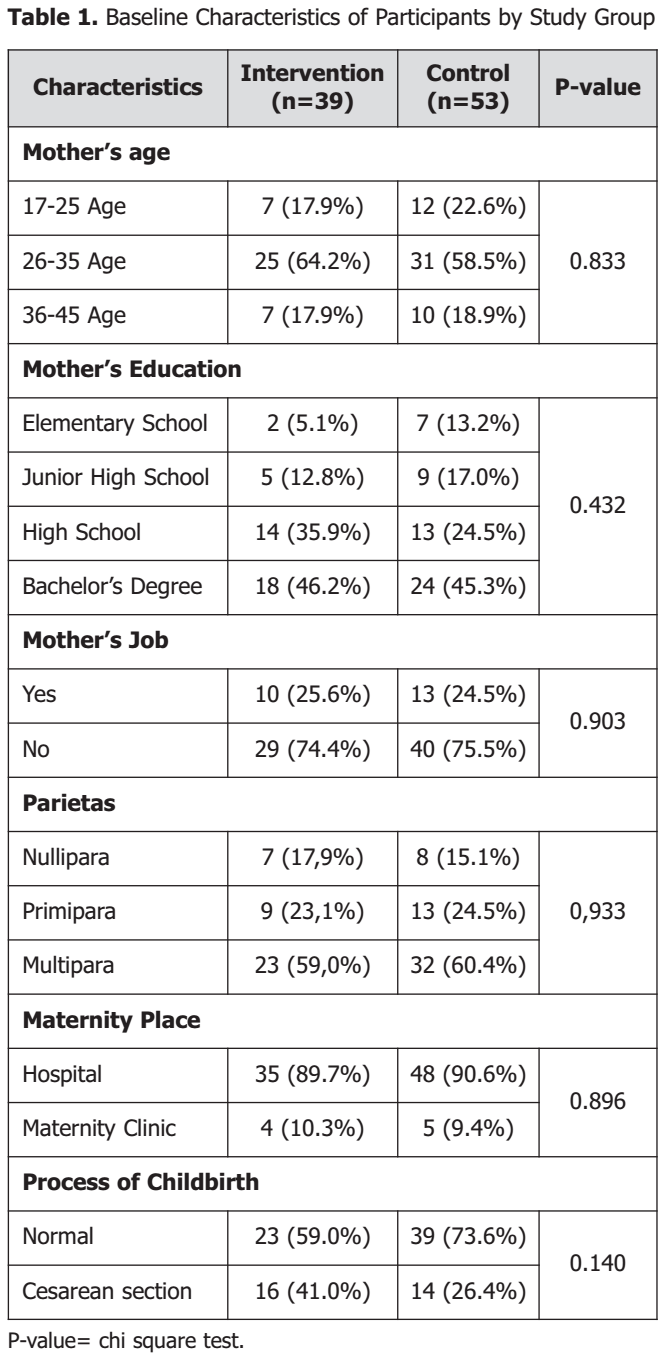
The baseline characteristics of participants in both groups were comparable in terms of age, education level, and employment status. Most participants were aged 26–35 years and had secondary to higher education.
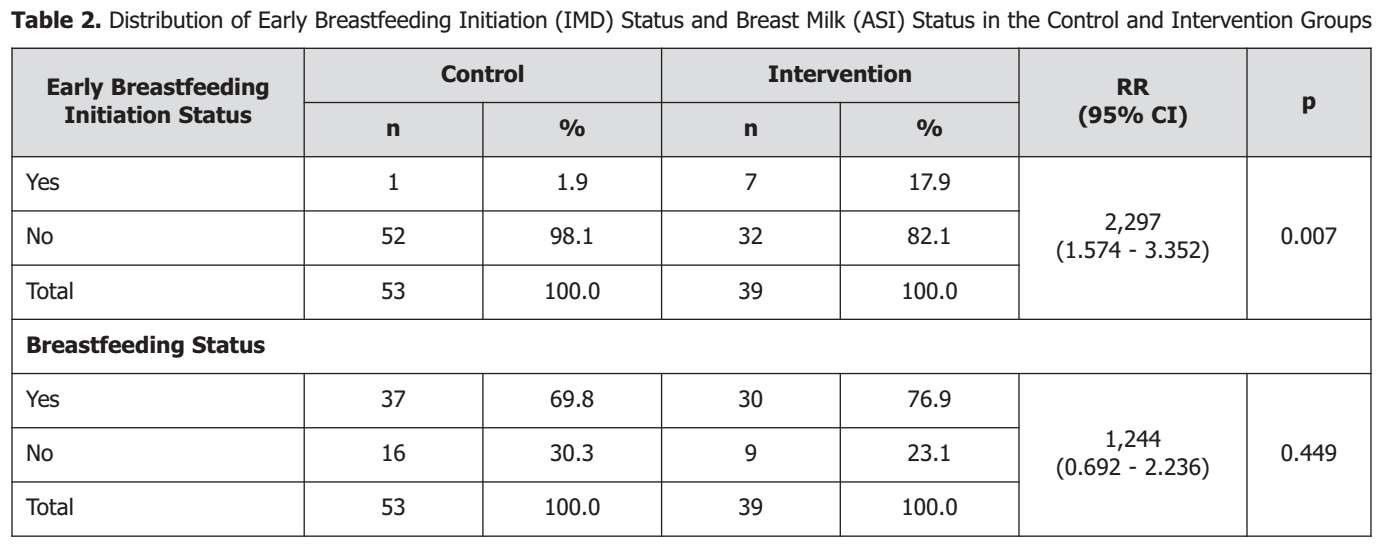
Early initiation of breastfeeding was significantly higher among mothers in the intervention group compared with those in the control group (17.9% vs. 1.9%; p = 0.007) with RR=2.297 (95% CI: 1.574–3.352; p=0.007). This indicates that the intervention significantly increased the risk (odds) of early breastfeeding initiation. Feeding practices were also more favorable in the intervention group. Although the difference in overall breastfeeding status between groups RR=1.244 (95% CI: 0.692–2.236; p=0.449) was not statistically significant., the quality of feeding practices showed meaningful improvement in the intervention group.
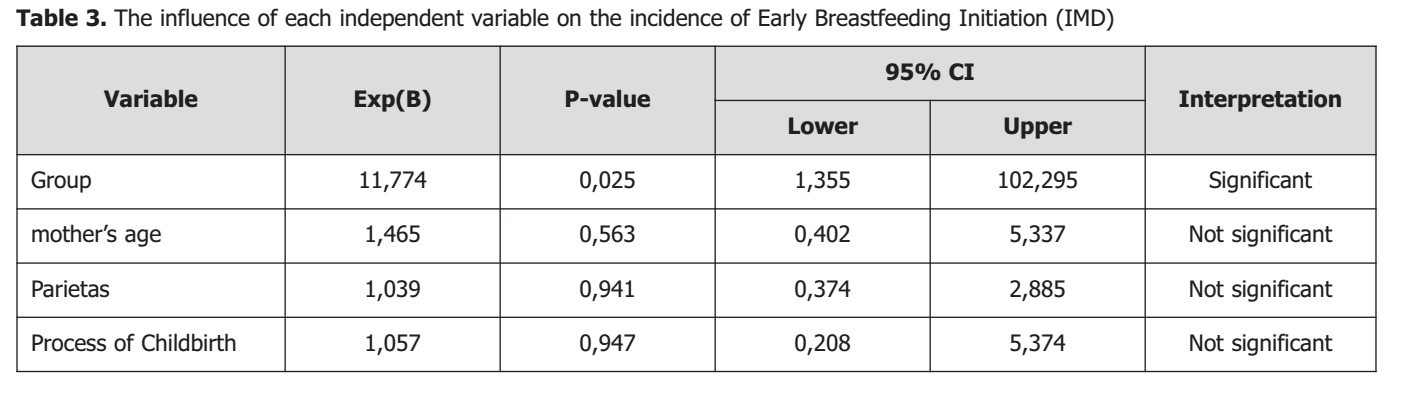
Table 3 demonstrates that among the examined variables, only the group assignment significantly influenced early breastfeeding initiation (IMD) (p = 0.025), with mothers in the intervention group exhibiting 11.77 times higher odds of achieving IMD compared to the control group. In contrast, maternal age, parity, and mode of delivery showed no statistically significant associations with IMD occurrence. These results highlight the substantial independent effect of the intervention on IMD success, irrespective of maternal demographic and obstetric characteristics.
DISCUSSION
This study demonstrates that antenatal breastfeeding counseling has a significant positive effect on early initiation of breastfeeding. Mothers who received counseling during pregnancy were more prepared and confident to initiate breastfeeding immediately after birth. These findings are consistent with recent studies showing that antenatal education increases the likelihood of early initiation of breastfeeding6,7.
The improvement in early initiation observed in this study supports the theory of breastfeeding self-efficacy, which emphasizes the role of knowledge, skills, and confidence in shaping breastfeeding behaviors8. Antenatal counseling enhances maternal self-efficacy by addressing misconceptions and providing practical guidance before delivery.
Although the difference in overall breastfeeding status was not statistically significant, the higher proportion of appropriate feeding practices in the intervention group suggests a positive trend. Similar findings have been reported in recent quasi-experimental studies, where antenatal counseling improved breastfeeding techniques and maternal confidence but required additional postnatal support to achieve sustained exclusive breastfeeding9.
The social–ecological model further explains these findings, as breastfeeding behavior is influenced not only by individual knowledge but also by interpersonal and health system factors10. Antenatal counseling addresses the individual level, while continued support from health workers and family members is necessary to maintain optimal practices.
Recent evidence highlights the importance of integrating antenatal and postnatal breastfeeding support. Randomized controlled trials published within the last five years have shown that combined counseling during pregnancy and the postpartum period leads to significantly higher rates of exclusive breastfeeding11,12.
The findings of this study are also aligned with the BabyFriendly Hospital Initiative (BFHI), which emphasizes early initiation of breastfeeding as a core step in successful breastfeeding13. Antenatal counseling prepares mothers to actively participate in BFHI-aligned practices at delivery facilities.
Cultural beliefs and local practices may influence breastfeeding behaviors and partly explain the non-significant difference in overall breastfeeding status. Studies conducted in Southeast Asia have shown that traditional beliefs and family influence can either support or hinder optimal feeding practices14.
Another contributing factor is the quality and continuity of counseling. Evidence suggests that repeated, skill-based counseling is more effective than single informational sessions15. This supports the need for structured and continuous counseling throughout pregnancy.
Overall, the results of this study reinforce current evidence that antenatal breastfeeding counseling is an essential component of maternal and child health programs, particularly in primary health care settings.
The relative risk (RR) for early initiation of breastfeeding (IMD) indicates that women in the intervention group had approximately 2.3 times higher likelihood of IMD compared to the control group (RR 2.297; 95% CI 1.574–3.352; p=0.007), consistent with recent meta-analyses from South Asia reporting significant enhancements in IMD practices following structured interventions9. This supports the efficacy of targeted educational strategies in substantially boosting IMD coverage, potentially reducing neonatal morbidity and mortality as evidenced in contemporary global studies emphasizing early IMD16.
Conversely, although the proportion of exclusive breastfeeding (ASI) was higher in the intervention group, the RR for ASI status (RR 1.244; 95% CI 0.692–2.236; p=0.449) showed no statistically significant difference, aligning with international reviews indicating that sustained, multifaceted support is required for meaningful impacts on exclusive breastfeeding17. External factors such as workplace support, maternity leave policies, and familial assistance often critically determine long-term ASI success, rendering interventions confined to the peripartum period insufficient for robust effects18. Overall, these findings affirm the intervention’s effectiveness in promoting IMD but highlight the need for extended postpartum and systemic reinforcements to optimize exclusive breastfeeding outcomes.
Table 3 indicates that only the group variable significantly influenced early breastfeeding initiation (IMD) with an OR of 11.774 (95% CI: 1.355–102.295; p=0.025), signifying that mothers in the intervention group had 11.8 times greater odds of achieving IMD compared to the control group. Other variables, including maternal age (OR 1.465; p=0.563), parity (OR 1.039; p=0.941), and mode of delivery (OR 1.057; p=0.947), showed no significant effects19. These findings align with a 2024 multilevel analysis from Ethiopia, which identified interventions as the primary predictor of IMD independent of maternal factors, and a 2023 Tanzanian study confirming the dominance of clinical support over demographic or obstetric characteristics in IMD practices20.
CONCLUSION AND RECOMMENDATIONS
Antenatal breastfeeding counseling significantly improves early initiation of breastfeeding and feeding practices. Although its effect on overall breastfeeding status was not statistically significant, the positive trends observed indicate meaningful benefits. Integrating structured breastfeeding counseling into routine antenatal care and strengthening postnatal support are recommended to optimize breastfeeding outcomes.
ACKNOWLEDGEMENTS
The authors would like to thank the health care staff and all participants who contributed to this study.
REFERENCES
- World Health Organization. Protecting, promoting and supporting breastfeeding in facilities providing maternity and newborn services: the revised Baby-friendly Hospital Initiative 2018 implementation guidance. Frequently asked questions: WHO-United Nations Children’s Fund; 2020.ISBN: 9789240001459, 924000145X.
- Victora CG, Bahl R, Barros AJD, et al. Breastfeeding in the 21st century: epidemiology, mechanisms, and lifelong effect. Pubmed. 2016;387(10017):475-90. doi: 10.1016/S0140-6736(15)01024-7.
- UNICEF. Infant and young child feeding: programming guide. New York: UNICEF; 2022.
- Tomori Cecilia. Overcoming barriers to breastfeeding. Best Pract Res Clin Obstet Gynaecol, Pubmed, 2022; Sep (83):60-71. doi: 10.1016/j.bpobgyn.2022.01.010.
- Gavine A, et al. Support for healthy breastfeeding mothers with healthy term babies. Cochrane Database Syst Rev. Pubmed 2022; 10(10):CD001141. doi: https://doi.org/10.1002/14651858.CD001141.pub6
- Nicholson WK, et al. Primary Care Behavioral Counseling Interventions to Support Breastfeeding. JAMA. 2025; e1-e7. doi: 10.1001/jama.2025.3650.
- Oggero MK, et al. Effects of Prenatal Breastfeeding Education on Breastfeeding Duration Beyond 12 Weeks: A Systematic Review. Health Education & Behavior, 2024; 51(5): 665-676. doi: 10.1177/10901981231220668
- Ozdemir EH, Sahin NE. Determination of mothers’ breastfeeding self-efficacy and mindful breastfeeding levels and their relationship.Nature Potfolio. 2025;15:35959:1-8. https://doi.org/10.1038/s41598-025-07651-w.
- Rifat MA, et al. Effectiveness of interventions on early initiation of breastfeeding in South Asia: a systematic review and meta-analysis of randomized controlled trials. Cochrane Database Syst Rev. 2025; 20(43): 1-16. doi: 10.1186/s13006-025-00736-2.
- Maddock JE & Hipp AJ. Nature Contact as an Aspect of Active Living. Journal of Healthy Eating and Active Living. 2024; 4 (3): 118-119. doi: https://doi.org/10.51250/jheal.v4i3.102.
- Patnode CD, et al. Interventions to Support Breastfeeding: Updated Evidence Report and Systematic Review for the US Preventive Services Task Force. Pubmed. 2025;333(17):1527- 1537. doi: 10.1001/jama.2024.27267.
- Makama M, et al. Barriers and facilitators to a healthy lifestyle in postpartum women: A systematic review of qualitative and quantitative studies in postpartum women and healthcare providers. Pubmed. 2021; 22(4): e13167. doi: 10.1111/obr.13167.
- World Health Organization, UNICEF. Baby-Friendly Hospital Initiative revised guidance. Geneva: WHO; 2018.ISBN: 978-92-4-159812-5.
- Scutti Susan. Sociocultural Influences on Exclusive Breastfeeding Practices in a Watershed Area. Universal Journal of Public Health. 2025; 13(4): 1058-1065. doi: 10.13189/ujph.2025.130428.
- Karimi Maryam, et al. The impact of continuous and intermittent supportive counseling on self-efficacy and continuation of breastfeeding in lactating women affected by COVID-19: a quasi-experimental trial, BMC Pregnancy Childbirth. 2024;17(24):376. https://doi.org/10.1186/s12884-024-06572-2.
- Rubagumya Davis, Muzdalfat Abeid, Eric Aghan, Mariam Noorani. Barriers to Early Initiation of Breastfeeding: A Hospital-Based Qualitative Study. East Afr Health Res J. 2025 Sep 30;9(1):78–85. doi: 10.24248/eahrj.v9i1.825
- Kim Sun Kyung, Seyeon Park, Jiwon Oh, Jisoon Kim, Sukhee Ahn. Interventions promoting exclusive breastfeeding up to six months after birth: A systematic review and meta-analysis of randomized controlled trials. International Journal of Nursing Studies. 2018 Apr 80; 94-105. doi 10.1016/j.ijnurstu.2018.01.004
- Zewdu Frieselam, Solomon Mekonnen, Azeb Atenafu. Early initiation of breastfeeding and exclusive breastfeeding practices and associated factors among first-time mothers attending governmental maternal and child health clinics in Gondar town, Northwest Ethiopia: a mixed method study. Int Breastfeed J. 2025 Apr 8;20:27. doi: 10.1186/s13006-025-00718-4
- Hussen Nuru Mohammed, Tigabu Hailu Kassa, Getnet Mamo Habtie. Multilevel analysis of early initiation of breastfeeding in Ethiopia. Front. Public Health, Sec. Public Health and Nutrition 2024. Volume 12 - 2024 | https://doi.org/10.3389/fpubh.2024.1393496
- Shirima Laura J., Henry L. Mlay et al. Early Initiation of Breastfeeding and Associated Factors Among Women of Reproductive age in Simiyu Region, Tanzania. Sage Open Nursing. 2023. https://doi.org/10.1177/23779608231209142
Explorar
Artículos
Volúmenes
Sobre la revista
Más leídos
Consumo de bebidas energizantes y efectos adversos en la salud de estudiantes universitarios
Nutrición Clínica y Dietética Hospitalaria
Uso de redes sociales y riesgo de trastornos de conducta alimentaria en adolescentes mujeres de un colegio en Lima, Perú
Nutrición Clínica y Dietética Hospitalaria
Consumo de bebidas energizantes en estudiantes universitarios y sus factores asociados.
Nutrición Clínica y Dietética Hospitalaria
Microbiota intestinal y eje intestino-cerebro: una revisión de su interacción con el sistema nervioso central
Nutrición Clínica y Dietética Hospitalaria
Factores asociados a la diabetes mellitus tipo 2 de la población adulta peruana.
Nutrición Clínica y Dietética Hospitalaria