Artículo original
Vol. 46 Núm. 1 (2026)
15 min
Multimorbidity and breastfeeding practices: findings from a population-based survey in Peru during 2024
Dayana BARRIGA-RODRIGUEZ1,2, José A. CHAQUILA2
1 Carrera Profesional de Nutrición, Universidad Peruano Cayetano Heredia, Lima, Perú.
2 Departamento de Investigación en Salud Pública, Sociedad Peruana de Nutrición, Lima, Perú.
*Correspondencia:
José A. Chaquila jachaquila@hotmail.com
Recepción:
09/12/2025
Aceptación:
29/12/2025
Publicación:
31/01/2026
Cómo citar
[1]2026. Multimorbilidad y prácticas de lactancia materna: hallazgos de una encuesta poblacional en perú durante el 2024. Nutrición Clínica y Dietética Hospitalaria. 46, 1 (Jan. 2026). DOI:https://doi.org/10.12873/461jachaquila.
Métricas
612
Visualizaciones
138
Descargas
Compartir
Compartir
Resumen (EN)
Objective: To examine the association between multimorbidity and breastfeeding practices among Peruvian women of reproductive age who participated in a national survey.
Materials and Methods: This was a secondary analysis of the 2024 Peruvian Demographic and Family Health Survey. The exposure variable was multimorbidity, constructed from three possible non-communicable chronic diseases (NCDs): obesity, type 2 diabetes mellitus, and hypertension. This variable included three categories: no condition, one condition, and two or more conditions. The outcomes were two breastfeeding practices: exclusive breastfeeding (EBF) and early initiation of breastfeeding (EIB), both categorized dichotomously. Potential confounders were also considered. Bivariate and multivariable analyses were conducted using Poisson regression with robust variance.
Results: A total of 8,163 women were eligible for the analysis. Overall, 65.3% did not practice EBF, and 45.3% had a delayed initiation of breastfeeding. Additionally, 42.1% had one NCD and 4.4% had two or more. A higher number of NCDs was associated with a lower prevalence of optimal breastfeeding practices, showing a dose–response pattern. In the multivariable model, women with two or more NCDs had a 33% lower prevalence of EIB (PR: 0.67; 95% CI: 0.55–0.82). However, multimorbidity was not significantly associated with EBF.
Conclusion: These findings underscore the need for targeted support strategies for women with multiple NCDs to promote optimal breastfeeding practices in the Latin American context.
Palabras clave (EN):
Non-Communicable Diseases
Maternal Health
Exclusive Breastfeeding
Postnatal care
Population Study
INTRODUCTION
In recent decades, despite decreasing mortality rates from non-communicable diseases (NCDs), their incidence has risen considerably1. This increase indicates that a growing number of individuals are losing disability-adjusted life years (DALYs), which negatively affects their quality of life. Moreover, in Latin American countries, elevated body mass index (BMI), high serum glucose levels, and elevated blood pressure rank among the three leading causes of DALYs and mortality2. As a result, national health programs are continuously structured to prevent NCDs.
In this context, multimorbidity is commonly defined as the coexistence of two or more diseases3, which deteriorates both physical and mental health by increasing the number of hospitalizations, polypharmacy, and frailty4. Additionally, multimorbidity has been shown to affect psychosocial components such as social relationships, quality of life, and emotional well-being4. Thus, multiple social programs and support networks have been implemented to assist these patients, who also tend to have a higher incidence of depression5.
Aligned with this, one behavior that may be affected by multimorbidity is breastfeeding (BF). Optimal BF practices—such as exclusive breastfeeding (EBF) and early initiation of breastfeeding (EIB)—have demonstrated health benefits for both mothers and infants6. Women who breastfeed tend to exhibit lower incidence of NCDs such as type 2 diabetes mellitus (T2DM)7, hypertension8 and cardiovascular disease9. For children, BF contributes to greater immunity, better nutrition, enhanced cognitive development, and lower long-term incidence of NCDs10-12.
However, evidence shows that women with NCDs often present inadequate BF practices. Women with NCDs are more likely to initiate BF late, discontinue BF, and provide infant formula, compared with women without chronic conditions13. Nonetheless, some studies have found no association between NCDs and BF practices14, underscoring the need for further research. Given the implications that multimorbidity may have on BF practices—a behavior crucial for child development—and the lack of evidence in Latin American countries, particularly Peru, the primary objective of this study was to assess the association between multimorbidity and BF practices among women of reproductive age who participated in a national survey in Peru in 2024. As a secondary objective, this study aimed to characterize BF practices and sociodemographic factors of women according to the number of coexisting diseases. Based on prior evidence, we hypothesized that a higher number of diseases would be associated with poorer BF practices.
METHODS
Study Desing
The proposed objective was addressed through a cross-sectional observational study using secondary data from the 2024 Peruvian Demographic and Family Health Survey (ENDES), the most recent version available at the time of the study (2025)15. ENDES is the largest national survey addressing health-related aspects of individuals across different age groups. It collects information from individuals and households across all regions of Peru and, given its representativeness, its data are used for public health decision-making. Additionally, ENDES is part of the international Demographic and Health Surveys (DHS) program, implemented in multiple countries worldwide.
Population and Sample
For this study, we included information from women of reproductive age (15–49 years). Only women who had given birth within the previous five years were included. Women lacking complete information on the variables of interest or presenting implausible BMI values (≤15 kg/m² or ≥50 kg/m²) were excluded16. In 2024, more than 36,000 households were surveyed as part of ENDES, selected through a two-stage, independent, probabilistic, and stratified sampling design15. The analytic final sample was 8,193 women.
Variables
Exposure variable: Multimorbidity
To determine multimorbidity, three NCDs were considered: obesity, T2DM and hypertension. Obesity was defined as BMI ≥ 30 kg/m²; T2DM was identified through an affirmative response to the question, “Have you ever been diagnosed with diabetes or high blood sugar?” Hypertension was identified using two criteria: (1) an affirmative response to the question, “Have you ever been diagnosed with high blood pressure?” or (2) systolic and diastolic blood pressure ≥140 and ≥90 mmHg, respectively. The multimorbidity variable included three categories: (1) no diseases, (2) one disease, and (3) two or more diseases.
Outcome variables: Breastfeeding practices
Two BF-related practices were evaluated for the woman’s most recent child: 1) EBF and 2) initiation of BF. Both variables refer to the practices employed with the woman’s last child. EBF was defined as providing only breast milk for six months without offering any other type of liquid. BF initiation refers to the moment when the mother first breastfed the child. EIB was considered when the mother breastfed immediately or within the first hour after birth. Conversely, delayed BF initiation was defined as breastfeeding after the first hour of birth. These classifications were based on World Health Organization guidelines17.
Covariates
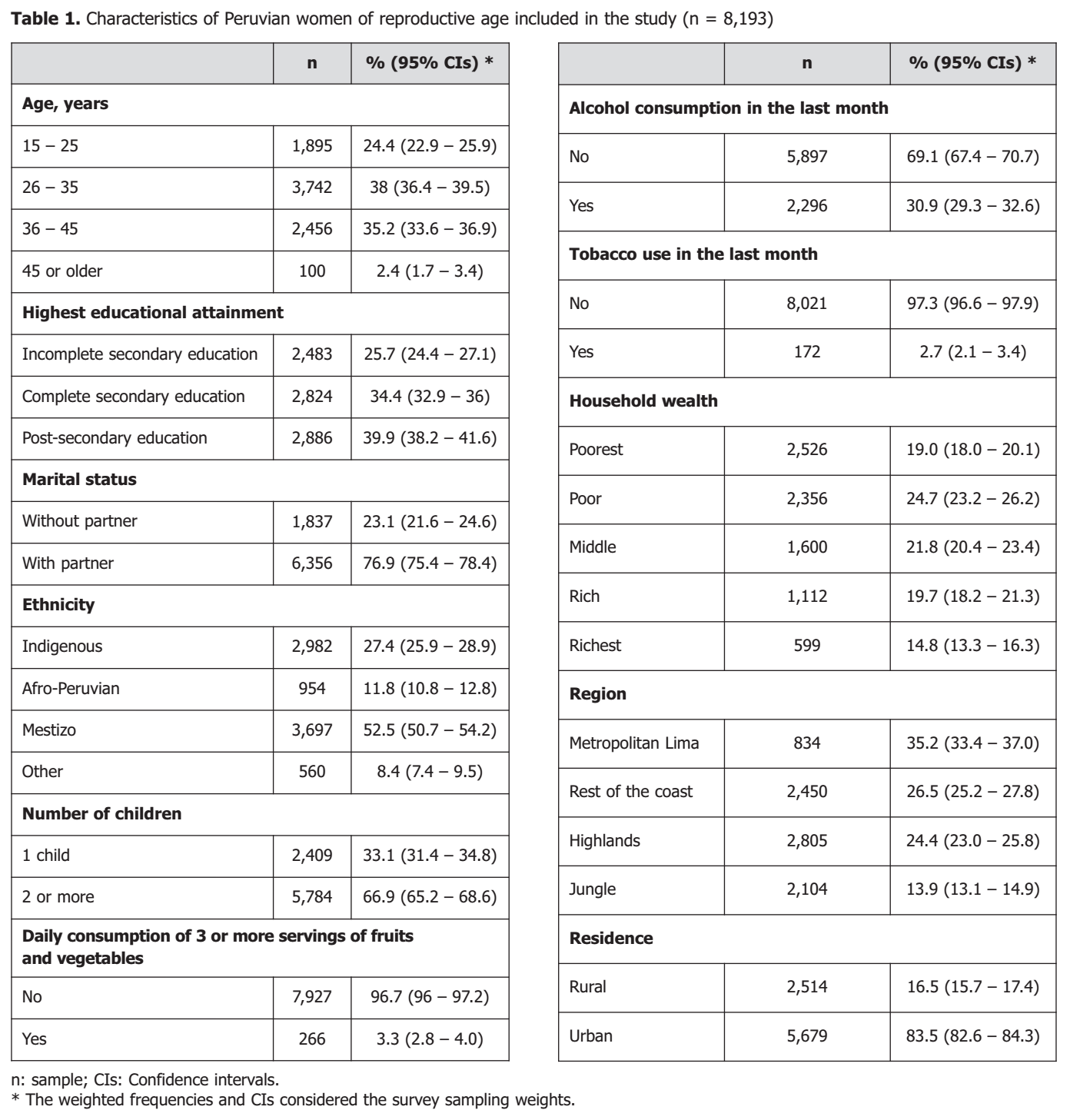
Covariates were selected based on epidemiological criteria, as all were considered potential hypothesized variables. These included the woman’s age, highest educational attainment, marital status, ethnicity, number of children, daily consumption of three or more servings of fruits and vegetables, alcohol and tobacco use in the last month, wealth (established in quintiles), and the woman’s household region and area of residence. The variable categories are shown in Table 1.
Statistical Analysis
All analyses were conducted using STATA version 19.5 SE (StataCorp). Given the complex survey design, sampling weights were applied to all statistical analyses. Descriptive analyses were expressed as absolute and weighted frequencies, including 95% confidence intervals (95% CIs). To determine differences between women’s characteristics according to exposure variables, bivariate analyses were conducted using Pearson’s chi-square test. Differences were considered statistically significant when the p-value was less than 0.05.
To address the study objective, a Poisson regression model with robust variance was performed, expressing the strength of association through prevalence ratios (PRs) and 95% CIs. Both crude and adjusted models (including all confounding variables) were constructed. This statistical model was chosen over binomial regression due to the number of adjustment variables and the risk of non-convergence in binomial models. Additionally, Poisson regression with robust variance allows for control of overdispersion, providing more reliable confidence intervals. Multicollinearity was assessed using variance inflation factors (VIFs) from an auxiliary linear regression model. No evidence of severe multicollinearity was detected, with a mean VIF of 1.77 and all VIFs < 10.
Ethical Consideration
The data provided by ENDES are publicly accessible and available for use by decision-makers and researchers at: https://proyectos.inei.gob.pe/microdatos/. Furthermore, the database does not contain sensitive or identifying information that would permit recognition or localization of survey participants. Additionally, ENDES operates under a Legal Framework approved by the Peruvian government, ensuring participant protection15. Therefore, ethical approval was not required for the execution of this study.
RESULTS
Participant characteristics
After applying the exclusion criteria, 8,193 women were eligible for analysis. The sample was predominantly composed of women with post-secondary education, women with two or more children, and women from low-wealth households. Additionally, three out of ten women consumed alcohol in the past 30 days, and eight out of ten resided in urban areas (Table 1).
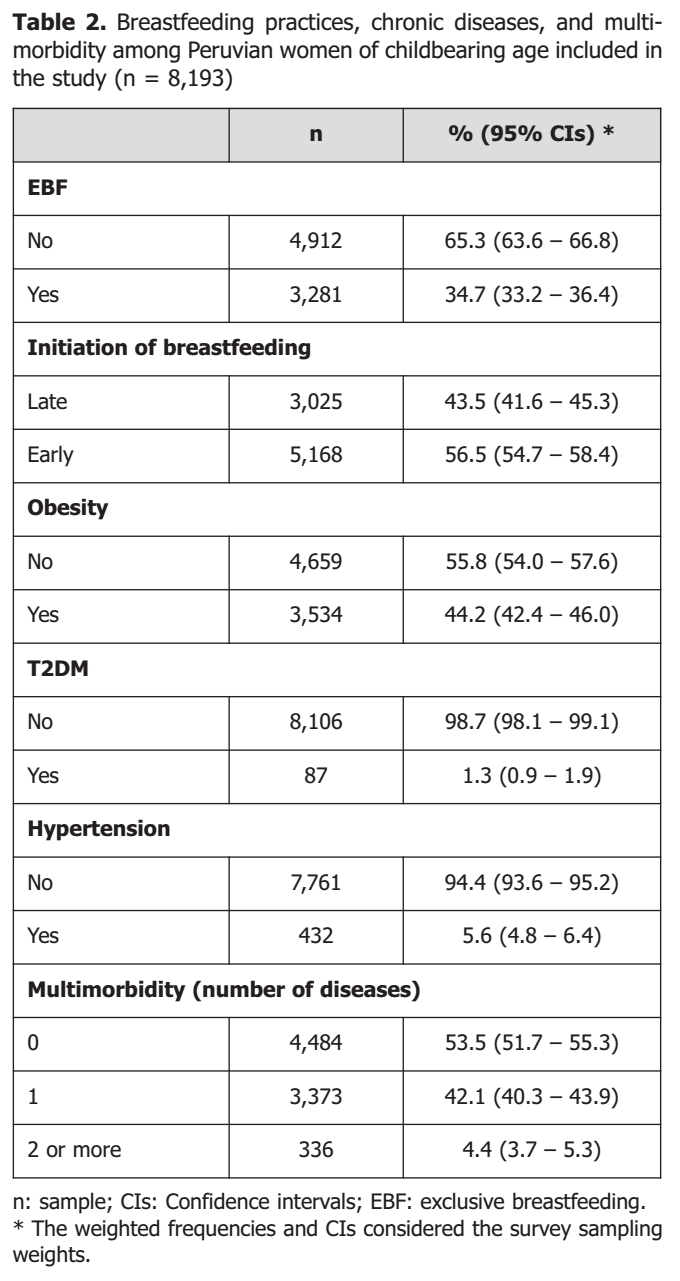
Additionally, nearly one-third of women practiced EBF, and slightly more than half had EIB (Table 2). Regarding health conditions, obesity was the most prevalent condition, whereas T2DM had the lowest prevalence. Overall, 4.4% of women presented two or more diseases.
Characterization of participants according to the number of diseases
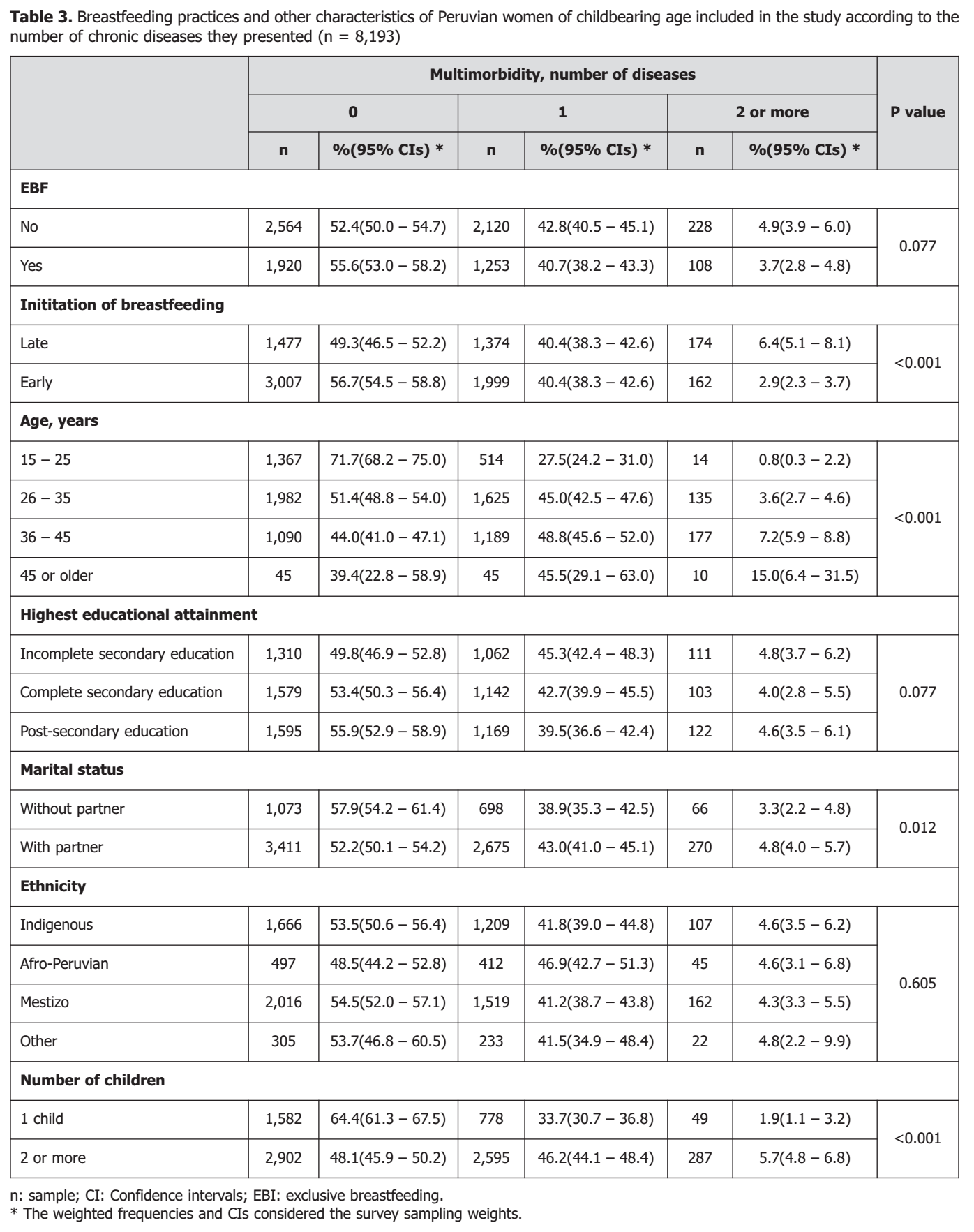
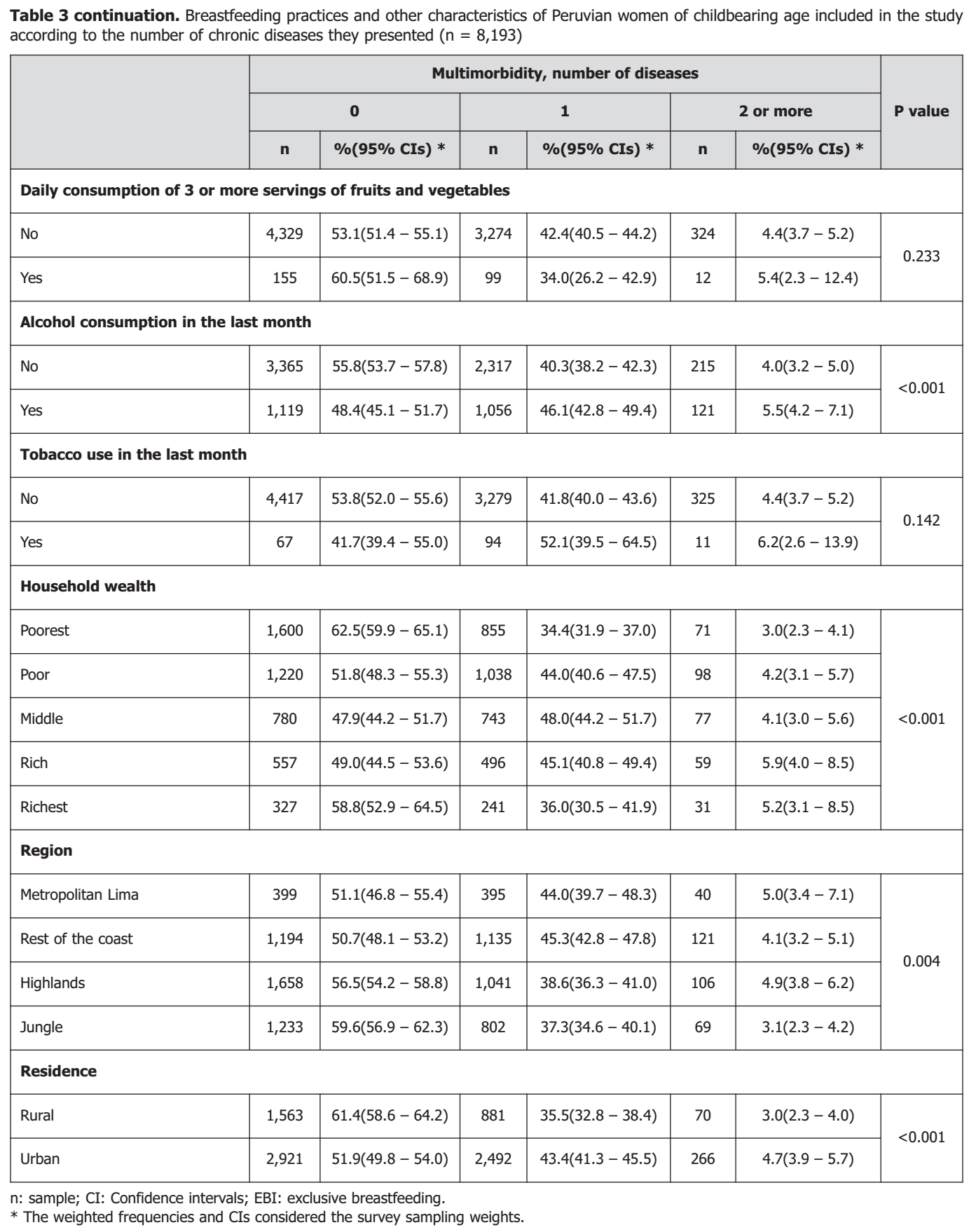
When evaluating participant characteristics according to the number of diseases, women who did not practice EBF had a higher proportion of having two or more diseases compared with those who did practice EBF, whereas women with no diseases reported EBF more frequently than their counterparts (Table 3). Similarly, women who initiated BF late had twice the prevalence of presenting two or more diseases compared with those who had EIB. Regarding other characteristics, the number of diseases differed statistically according to the woman’s age, marital status, number of children, alcohol consumption, household wealth, region, and area of residence. Higher age, greater number of children, and higher household wealth were associated with a greater presence of two or more diseases. Additionally, a lower prevalence of two or more diseases was observed in the rainforest region and among women living in rural households (Table 3).
Multivariate association between multimorbidity and breastfeeding practices
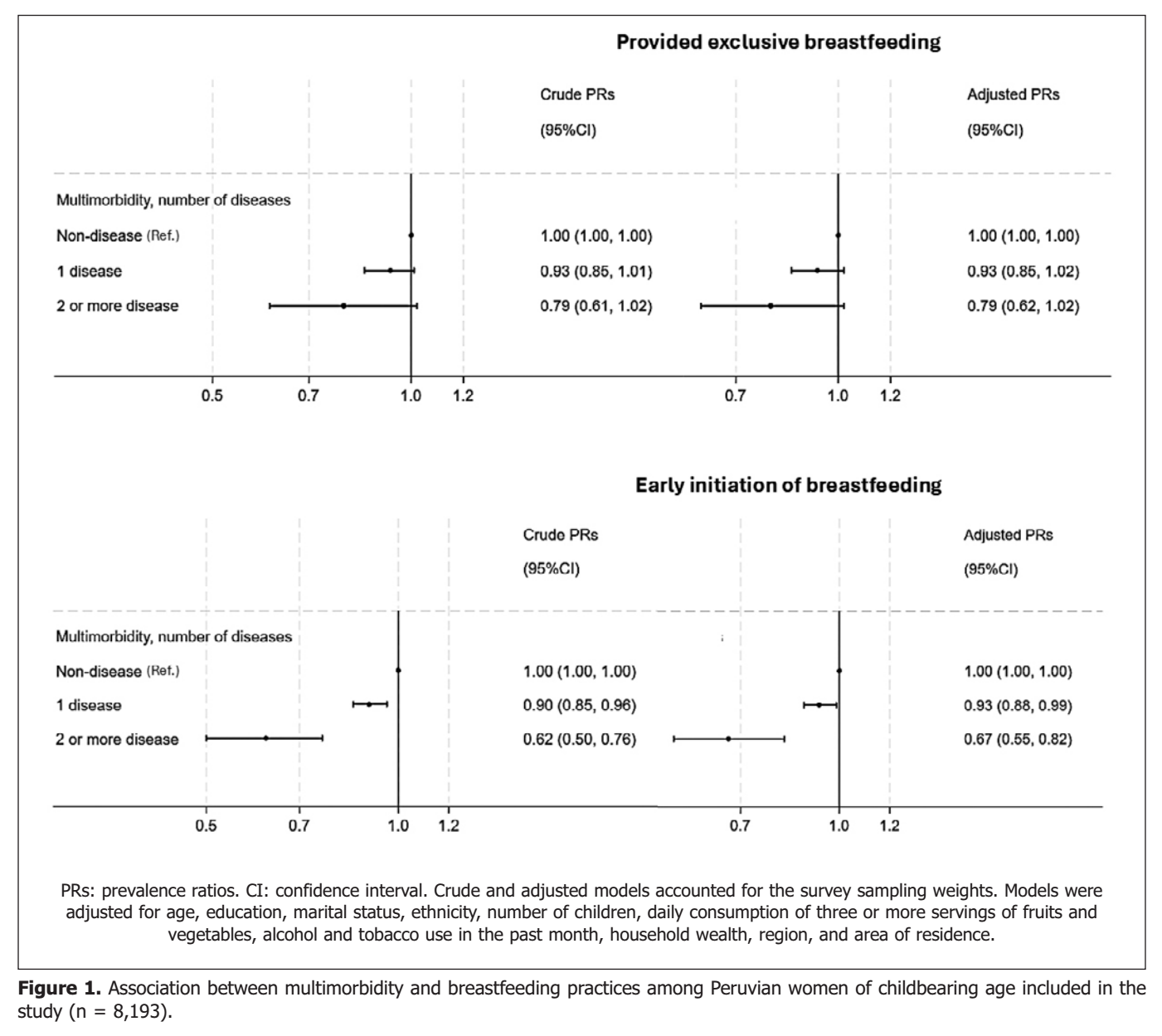
To address our hypothesis—that a higher number of diseases would adversely affect optimal BF practices—multivariate association models were conducted. When evaluating the association between multimorbidity and having provided EBF, a dose–response pattern was observed: mothers with 1 and with ≥2 diseases had 7% and 21% lower prevalence of having provided EBF, respectively, compared with mothers without diseases, in both crude and adjusted models. However, this association was not statistically significant. Conversely, a statistically significant dose–response association was found between multimorbidity and BF initiation. In both crude and adjusted models, a higher number of diseases was associated with a lower prevalence of EIB. Mothers with 1 and ≥2 diseases showed 7% and 33% lower prevalence of EIB, respectively, compared with those without diseases.
DISCUSSION
Main Findings
Our results indicate that in a sample of more than 8,000 Peruvian women of childbearing age who participated in a national survey in 2024, those with NCDs had a lower prevalence of EIB, with women presenting two or more NCDs showing a 33% lower prevalence of this good BF practice (adjusted PRs: 0.67, 95% CI: 0.55–0.82). Regarding EBF, we also found a lower prevalence as the number of NCDs increased, with a 21% lower prevalence of having provided EBF among women with two or more diseases compared to those without diseases. However, this association (adjusted PR: 0.79, 95% CIs: 0.62–1.02) did not reach statistical significance, suggesting that multimorbidity did not significantly affect the provision of EBF.
Comparison with other studies and potential explanatory mechanisms
Regarding EIB, our findings show that the presence of NCDs significantly decreased this practice. This aligns with what has been reported in a sample of Egyptian women, where those with NCDs were less likely to initiate BF within the first hour (48%) compared to their healthy counterparts (71%)13. These findings may be explained by delayed onset of lactogenesis II, the stage when breast milk production increases substantially18,19. Women with obesity have been shown to have a 56% higher probability of delayed lactogenesis II, and this probability is threefold higher among women receiving insulin therapy for diabetes (OR: 3.11)20.
Another physiological mechanism that may explain our findings is the reduced secretion of prolactin, the hormone responsible for milk production18. After childbirth, progesterone levels decrease, allowing sustained prolactin secretion to initiate milk production19. In a study of 40 obese mothers, prolactin levels before and after breastfeeding were significantly lower compared to normal-weight women, even up to seven days postpartum21. This suggests that excess adiposity, a common risk factor for multiple NCDs such as T2DM and hypertension22, may contribute to early BF cessation and may underlie our results.
In contrast, unlike other studies, EBF was not significantly associated with the presence of NCDs in our findings. This differs from a Canadian sample, where women with NCDs were more than twice as likely to discontinue EBF (OR: 2.48, 95% CIs: 1.49–4.12)23 and from Australian data showing that women with obesity had a 40% higher probability of not EBF for six months14. Additionally, we found that women with two or more diseases tended to be older and from wealthier households. With increasing age, disease incidence rises due to weaker immune response, loss of muscle mass, and greater cumulative exposure to harmful factors across the life course24. Moreover, in low- and middle-income countries, higher socioeconomic status has been linked to poorer health outcomes due to excess malnutrition and sedentary lifestyles25. These results underscore the importance of prioritizing specific population groups when designing BF promotion strategies.
Implications of our study
The findings of this study highlight the need for timely interventions targeting women of childbearing age with at least one NCD who plan to become mothers. Educational programs on optimal BF practices and their benefits could help raise awareness and promote appropriate BF behaviors. Furthermore, the characterization of women by number of diseases allows prioritization of specific groups. For example, women aged 36 years and older, partnered women, those with two or more children, wealthier households, residents of urban areas, and those living along the coast will require special attention due to their higher vulnerability to multimorbidity. These findings may support the implementation or restructuring of BF awareness programs.
Limitations and strengths
This study has limitations that should be considered when interpreting its findings. First, there may be measurement bias, particularly in anthropometric data, disease diagnosis, and duration of disease. Unlike hypertension and obesity, T2DM diagnosis was based on self-report rather than clinical measurement; however, self-report questions are commonly used in population studies to estimate national prevalence. Second, in line with the previous limitation, recall bias may be present, potentially affecting the accuracy of self-reported BF practices, T2DM diagnosis, and other covariates. Third, the cross-sectional design prevents the establishment of causal pathways between exposure (multimorbidity) and outcomes (BF practices). Nevertheless, the multivariable regression approach allows estimation of total effects while controlling for potential confounders, providing a more precise approximation of the underlying associations. Fourth, ENDES data allowed estimation of multimorbidity only from obesity, T2DM, and hypertension, limiting exploration of other NCDs that may also be present. Still, elevated BMI, hyperglycemia, and high blood pressure are the main contributors to NCD-related DALYs in Latin America2. Despite these limitations, the main strengths of our investigation include the use of a nationally representative survey with a large sample of women of childbearing age. Additionally, standardized measurement protocols and data collection procedures help minimize measurement and recall biases.
CONCLUSIONS
In a sample of more than 8,000 women of childbearing age, our results show a dose–response relationship between multimorbidity and delayed BF initiation, with women experiencing one and two or more NCDs showing 7% and 33% lower prevalence, respectively, of EIB. We also found a trend of lower EBF as the number of diseases increased, although this association was not statistically significant. These findings may contribute to identifying vulnerable groups for targeted awareness strategies promoting optimal breastfeeding practices.
REFERENCES
- Taheri Soodejani M. Non-communicable diseases in the world over the past century: a secondary data analysis. Front Public Health 2024;12:1436236. https://doi.org/10.3389/fpubh.2024.1436236.
- Murray CJL, Aravkin AY, Zheng P, et al. Global burden of 87 risk factors in 204 countries and territories, 1990–2019: a systematic analysis for the Global Burden of Disease Study 2019. The Lancet 2020;396:1223–49. https://doi.org/10.1016/S0140-6736(20)30752-2.
- Almirall J, Fortin M. The Coexistence of Terms to Describe the Presence of Multiple Concurrent Diseases. J Comorbidity 2013;3:4–9. https://doi.org/10.15256/joc.2013.3.22.
- Skou ST, Mair FS, Fortin M, et al. Multimorbidity. Nat Rev Dis Primer 2022;8:48. https://doi.org/10.1038/s41572-022-00376-4.
- Read JR, Sharpe L, Modini M, et al. Multimorbidity and depression: A systematic review and meta-analysis. J Affect Disord 2017;221:36-46. https://doi.org/10.1016/j.jad.2017.06.009.
- Kelishadi R, Farajian S. The protective effects of breastfeeding on chronic non-communicable diseases in adulthood: A review of evidence. Adv Biomed Res 2014;3:3. https://doi.org/10.4103/2277-9175.124629.
- Chowdhury R, Sinha B, Sankar MJ, et al. Breastfeeding and maternal health outcomes: a systematic review and meta-analysis. Acta Paediatr Oslo Nor 1992 2015;104:96–113. https://doi.org/10.1111/apa.13102.
- Zheng S-W, Lin X-Y, Xie N-S, et al. Breastfeeding was associated with lower risks of maternal postpartum hypertension and diabetes mellitus: A systematic review and meta-analysis. World J Diabetes 2025;16. https://doi.org/10.4239/wjd.v16.i11.111578.
- Tschiderer L, Seekircher L, Kunutsor SK, et al. Breastfeeding Is Associated With a Reduced Maternal Cardiovascular Risk: Systematic Review and Meta-Analysis Involving Data From 8 Studies and 1 192 700 Parous Women. J Am Heart Assoc 2022; 11:e022746. https://doi.org/10.1161/JAHA.121.022746.
- Muro-Valdez JC, Meza-Rios A, Aguilar-Uscanga BR, et al. Breastfeeding-Related Health Benefits in Children and Mothers: Vital Organs Perspective. Medicina (Mex) 2023;59:1535. https://doi.org/10.3390/medicina59091535.
- Modak A, Ronghe V, Gomase KP. The Psychological Benefits of Breastfeeding: Fostering Maternal Well-Being and Child Development. Cureus 2023;15:e46730. https://doi.org/10.7759/cureus.46730.
- Patnode CD, Henrikson NB, Webber EM, et al. Breastfeeding and Health Outcomes for Infants and Children: A Systematic Review. Pediatrics 2025;156:e2025071516. https://doi.org/10.1542/peds.2025-071516.
- Salama ES, Hussein M, Fetih AN, et al. High-risk pregnancy and risk of breastfeeding failure. J Egypt Public Health Assoc 2024;99:27. https://doi.org/10.1186/s42506-024-00172-w.
- Joham AE, Nanayakkara N, Ranasinha S, et al. Obesity, polycystic ovary syndrome and breastfeeding: an observational study. Acta Obstet Gynecol Scand 2016;95:458–66. https://doi.org/10.1111/aogs.12850.
- ENDES n.d. https://proyectos.inei.gob.pe/endes/ (accessed November 27, 2025).
- Goodarzynejad H, Meaney C, Brauer P, et al. Recent trends in adult body mass index and prevalence of excess weight. Can Fam Physician 2022;68:128–38. https://doi.org/10.46747/cfp.6802128.
- World Health Assambly. Global strategy for infant and young child feeding: the optimal duration of exclusive breastfeeding. Geneva: World Health Organization; 2001.
- Al-Chalabi M, Bass AN, Alsalman I. Physiology, Prolactin. StatPearls, Treasure Island (FL): StatPearls Publishing; 2025.
- Chauhan G, Tadi P. Physiology, Postpartum Changes. StatPearls, Treasure Island (FL): StatPearls Publishing; 2025.
- Matias SL, Dewey KG, Quesenberry CP, et al. Maternal prepregnancy obesity and insulin treatment during pregnancy are independently associated with delayed lactogenesis in women with recent gestational diabetes mellitus. Am J Clin Nutr 2014;99:115–21. https://doi.org/10.3945/ajcn.113.073049.
- Rasmussen KM, Kjolhede CL. Prepregnant Overweight and Obesity Diminish the Prolactin Response to Suckling in the First Week Postpartum. Pediatrics 2004;113:e465–71. https://doi.org/10.1542/peds.113.5.e465.
- Putra IGNE, Daly M, Sutin A, et al. Obesity, psychological well-being related measures, and risk of seven non-communicable diseases: evidence from longitudinal studies of UK and US older adults. Int J Obes 2024;48:1283–91. https://doi.org/10.1038/s41366-024-01551-1.
- Scime NV, Patten SB, Tough SC, et al. Maternal chronic disease and breastfeeding outcomes: a Canadian population-based study. J Matern Fetal Neonatal Med 2022;35:1148–55. https://doi.org/10.1080/14767058.2020.1743664.
- Chen Q-F, Ni C, Jiang Y, et al. Global burden of disease and its risk factors for adults aged 70 and older across 204 countries and territories: a comprehensive analysis of the Global Burden of Disease Study 2021. BMC Geriatr 2025;25:462. https://doi.org/10.1186/s12877-025-06095-1.
- Templin T, Cravo Oliveira Hashiguchi T, Thomson B, et al. The overweight and obesity transition from the wealthy to the poor in low-and middle-income countries: A survey of household data from 103 countries. PLoS Med 2019;16:e1002968. https://doi.org/10.1371/journal.pmed.1002968.
Explorar
Artículos
Volúmenes
Sobre la revista
Más leídos
Consumo de bebidas energizantes y efectos adversos en la salud de estudiantes universitarios
Nutrición Clínica y Dietética Hospitalaria
Uso de redes sociales y riesgo de trastornos de conducta alimentaria en adolescentes mujeres de un colegio en Lima, Perú
Nutrición Clínica y Dietética Hospitalaria
Consumo de bebidas energizantes en estudiantes universitarios y sus factores asociados.
Nutrición Clínica y Dietética Hospitalaria
Microbiota intestinal y eje intestino-cerebro: una revisión de su interacción con el sistema nervioso central
Nutrición Clínica y Dietética Hospitalaria
Factores asociados a la diabetes mellitus tipo 2 de la población adulta peruana.
Nutrición Clínica y Dietética Hospitalaria